
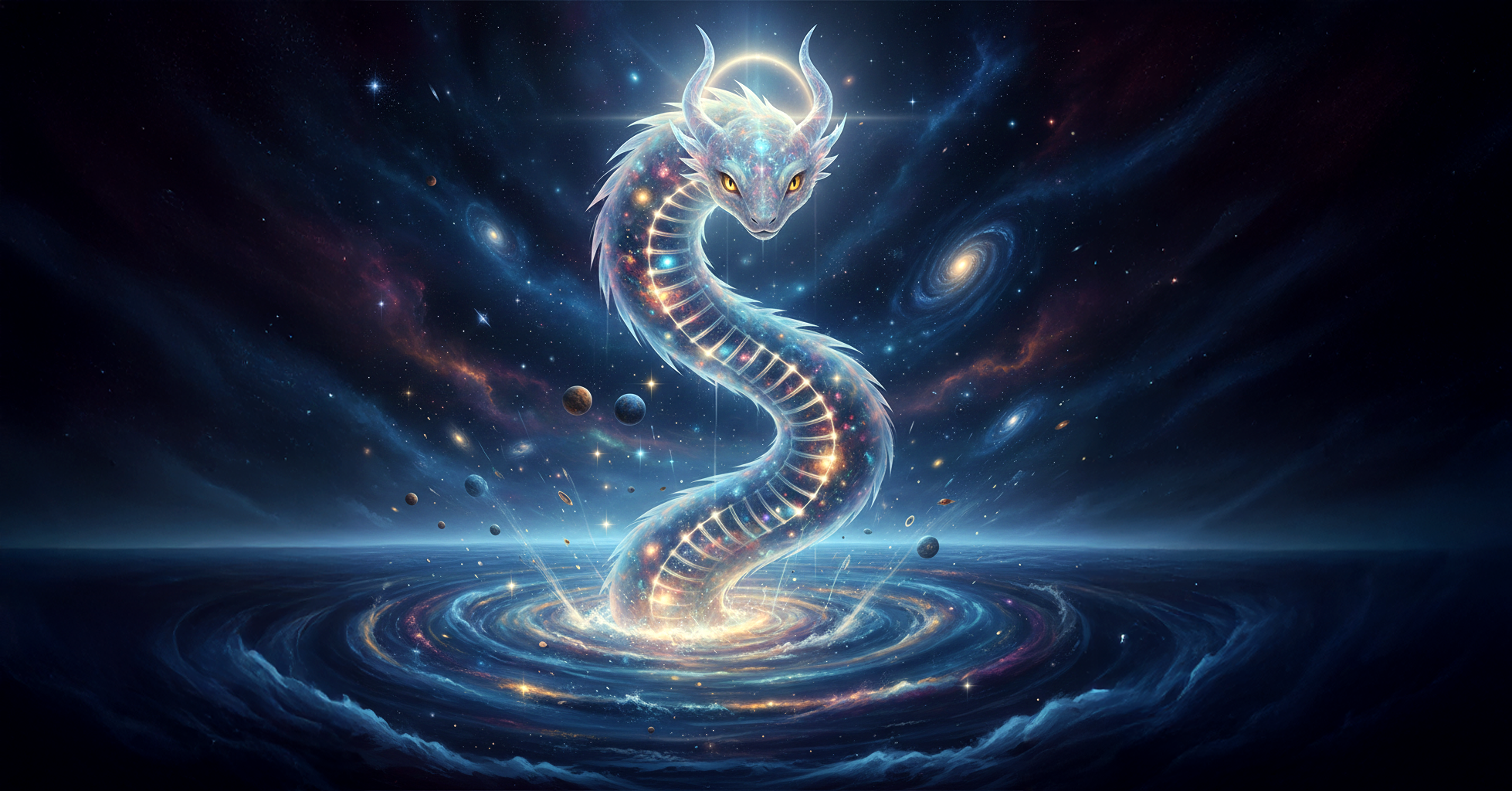
There’s a small, slightly eerie truth about humans: no matter where you look in history, we keep returning to the same shape. Trace a line from the Nile to the Amazon, from the temples of Teotihuacán to the hills of Southeast Asia, and serpents show up again and again — like a melody the whole world somehow remembers. Their details change depending on the culture — feathers here, crowns there, a thousand heads somewhere else — but the core idea stays the same: something that moves, coils, doubles, divides, and comes back around.
When people try to make sense of the world, they pick images that do two jobs at once: they capture what they see, and they express how something behaves. The serpent is perfect for that. Its movement is unmistakable. And symbolically, it can be anything the story needs — guardian, healer, teacher, destroyer. Put it in a doorway and it protects; place it in the sky and it connects worlds; wrap it around a staff and it signals medicine. It becomes a shorthand for things that aren’t solid objects at all — flow, change, cycles, hidden structures.
And sure, part of our reaction to snakes is biological. Our brains are wired to spot curves and S-shapes fast — the old “snake-detection” instinct. But that only explains the jolt of fear. It doesn’t explain why humanity turned that same shape into a symbol of wisdom and creation. That leap came later, when our ancestors kept seeing that looping curve everywhere — in water currents, in vines, in roots, in lightning, in smoke — and realised they could use one simple form to express all those different patterns in nature.
Why the Serpent Is Often Shown as Two
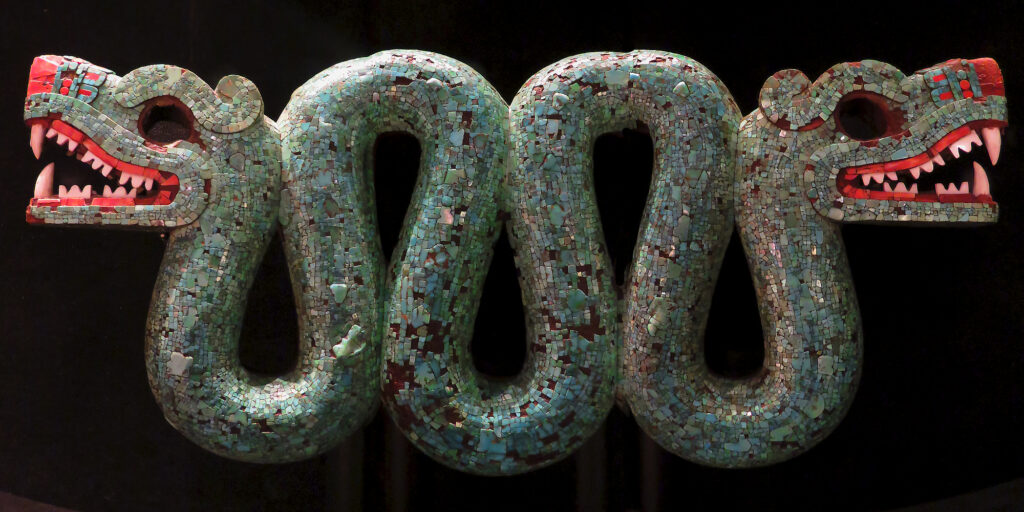
One of the strangest consistencies across distant cultures is the impulse to double the serpent. Two-headed snakes, paired serpents, mirror-serpents, serpents wound around each other — that motif crops up everywhere. It is symbolic engineering. Imagine you want to express relational motion: something that is twofold by design, that acts in pairs, that reflects, inverts, and becomes itself again. How do you show that? You draw two lines that twist into one.
Doubling does several jobs at once. It signals polarity (day/night, earth/sky), redundancy (a mechanism with a backup), movement in two directions at once (forward and backward, inward and outward), and relational balance (the tension of opposites held together). A single serpent suggests movement; a doubled serpent suggests a system — an architecture that can perpetuate itself, split, recombine and transmit form. That’s why artists chose it when they wanted to compress philosophical complexity into a single readable icon.
Artists were also intentionally paradoxical. A two-headed serpent can look both symmetrical and asymmetrical, single and plural. It resists simple interpretation — which is exactly the point. These images are compact instructions for thinking: look for pairs, look for mirrored processes, expect division and reunion.
Three Worlds, One Intuition: Egypt, Mesoamerica, Amazon
To make the idea concrete, take three regions with no historical contact — three cultural laboratories that developed independently — and look at how each used the serpent.
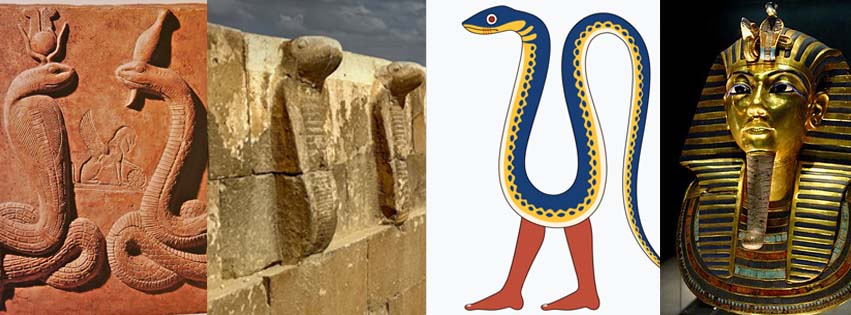
Egypt: Egyptian artists loved hybrid figures. Gods wear animal heads; animals gain crowns; human limbs appear on divine creatures. The serpent in Egypt is rarely a mere animal. It is a glyph of power: a protector on the brow of a pharaoh, a guardian at a gateway, a principle wrapped around emblems of life. When Egyptians depict serpents in pairs or add human limbs, they are encoding intentionality: this is an active, directed force. The image functions as a kind of sentence in a visual grammar that priests and initiates could read.
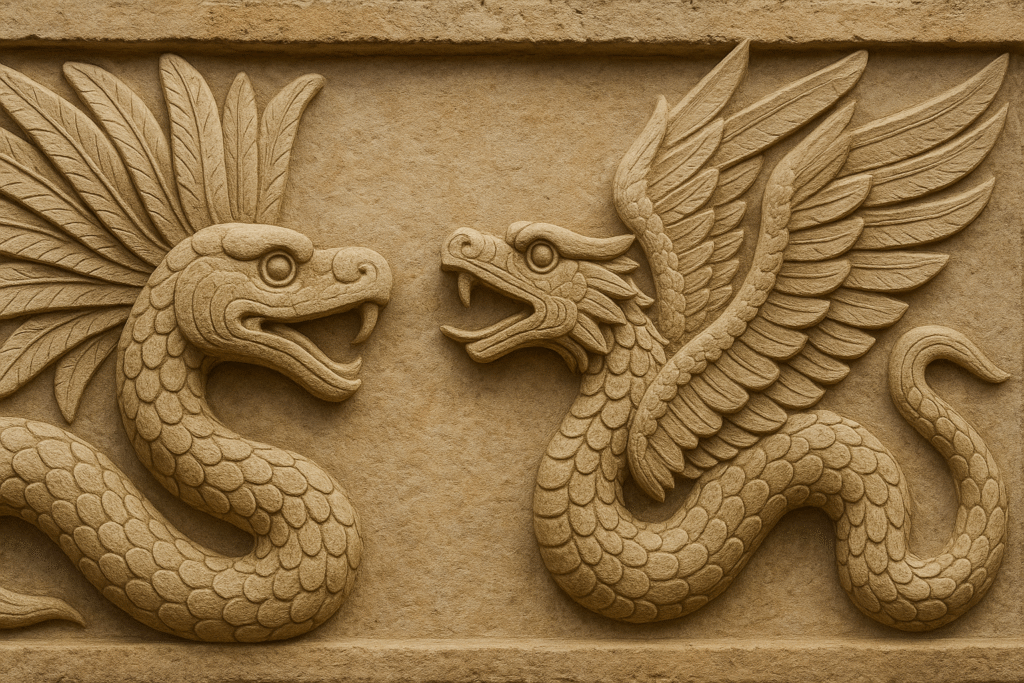
Mesoamerica: Move across oceans to the highlands and lowlands of the Americas and meet Quetzalcoatl and Kukulkan: feathered, plumed serpents that are as much sky as earth. A serpent with feathers is a paradox turned into a bridge. The feathers point upward; the scales hug the ground. In Teotihuacán, on Maya stairways, and in the iconography of the Aztecs, the plumed serpent brings agricultural knowledge, astronomy, language, and social order. Its very name in Nahuatl — where “coatl” can mean both serpent and twin — embeds duality into the word itself. The symbol becomes a manifesto: intelligence arrives in pairs, as instructions wrapped in living motion.
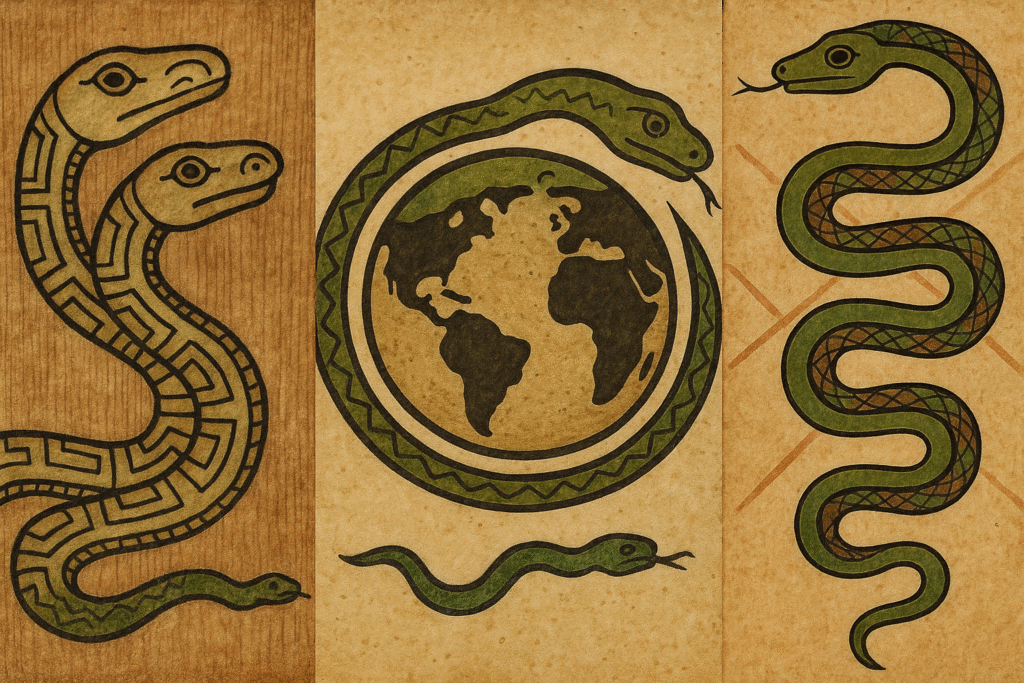
Amazon: Walk into Amazonian cosmologies and you find the serpent described with a striking flexibility of scale. Shamans draw the cosmic anaconda sometimes as a tiny thread, sometimes as a dual-headed beast, sometimes as a river-serpent coiling around a disc-shaped earth. The shamanic point is practical rather than doctrinaire: what gives life this power is not size but behaviour — the ability to coil, divide, reshape, and to carry force through water. The Amazonian serpent is a teacher, a midwife, a principle of metamorphosis that can appear in visions as either minute or planetary — it’s the same structural idea taking different sizes for different lessons.
When cultures separated by thousands of miles and millennia all converge on the same symbolic insight — a coiling, doubled principle tied to water and transformation — it suggests something deeper than contact or imitation. It suggests people noticed the same set of dynamic patterns in the world: motion that folds, movement that mirrors itself, life that arises from fluid depths. They then distilled that set of dynamics into a single, flexible figure: the serpent.
WATER, ORIGINS & THE PARADOX OF THE MYTHIC SERPENT
If you gather creation stories from the world’s shelves and lay them side by side, a curious sameness emerges. Cultures that differ in every other detail — language, rituals, gods, values — agree on one thing:
Life begins in water.
An immense, timeless, unfathomable body of water that predates everything. A darkness that ripples. A depth that holds all potential.
And rising from that water, again and again, you find the serpent.
Why?
Why Water? Why This Creature?
Water behaves the way creation behaves.
It shifts between forms, merges with what it touches, holds memory, swallows light, returns in cycles, and moves in spirals. It doesn’t hold a shape for long; it makes one, lets it go, and makes another.
The serpent matches that logic almost too perfectly:
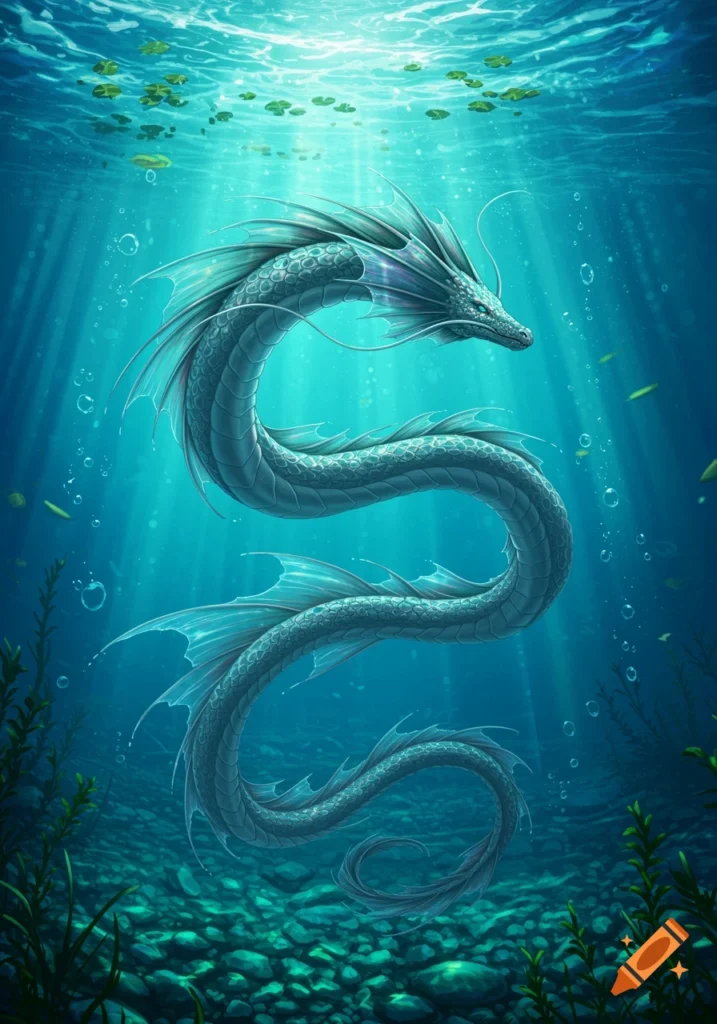
It’s body writes curves the way water writes waves
It can vanish in a moment (a slip under a root, a glide beneath the surface)
It sheds and renews itself
It lives at the boundary of seen and unseen
So when cultures tried to explain creation — a process as slippery and unfixed as water — they paired the two.
The serpent becomes water’s signature.
Water becomes the serpent’s home.
And here’s where myth sharpens into something strangely precise:
the serpent is the organizing force, the blueprint of life, the architect.
The Earth Floats on a Sea
Across traditions, the world itself is not anchored; it drifts.
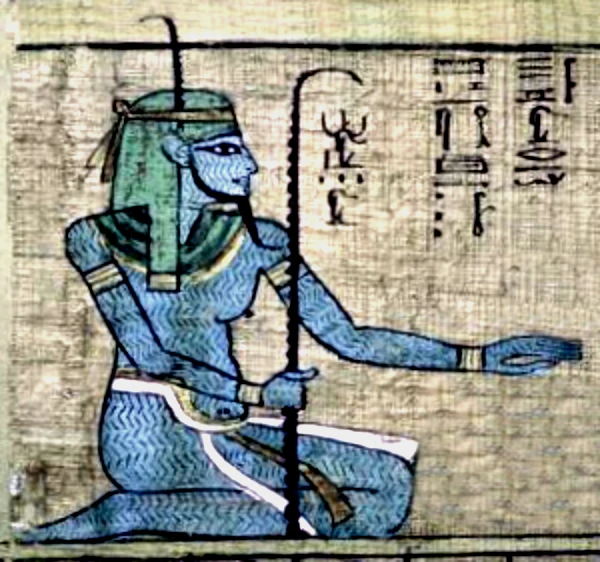
Egypt speaks of Nun, the primordial watery abyss.
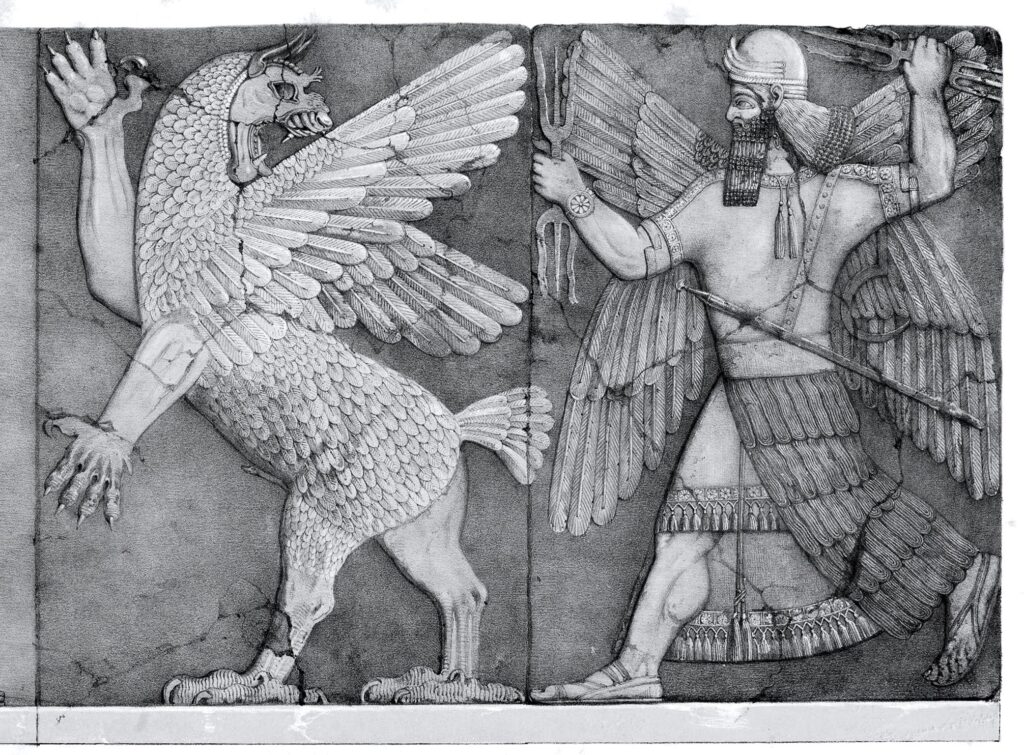
Mesopotamia imagines Tiamat, the cosmic sea-mother whose waters give rise to gods.
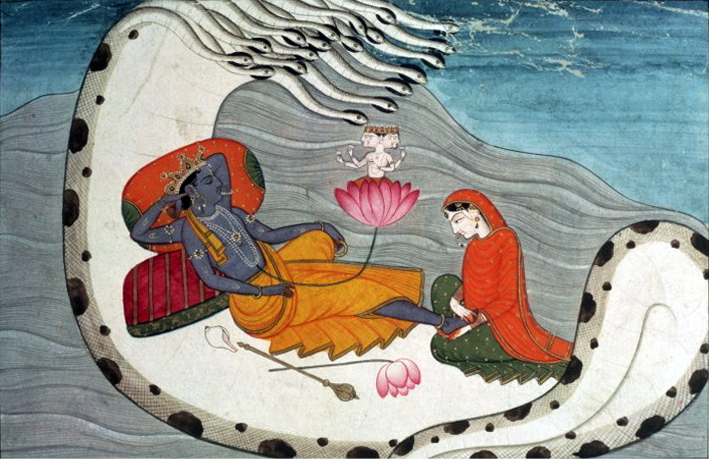
Hindu cosmology describes Kshira Sagara, the Ocean of Milk on which the universe rests like a lotus dream.
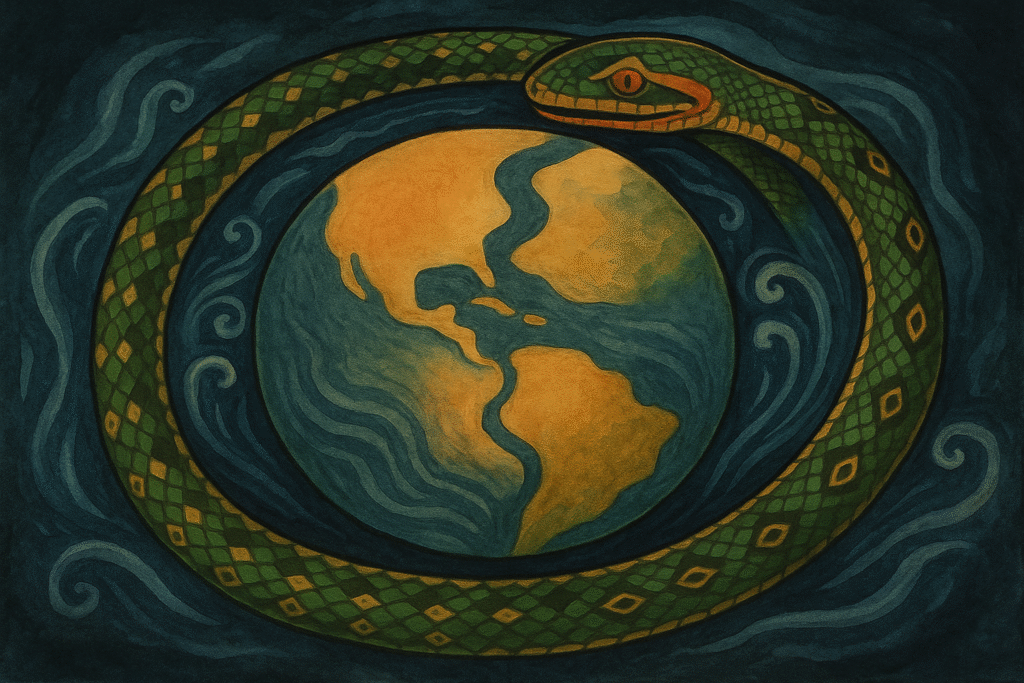
Amazonian peoples describe Earth as a disc floating in “great waters,” watched or encircled by a cosmic anaconda, half in the world, half out of it.
These cultures didn’t share geography or history.
Yet they all imagined the beginning as water — and that water being shaped, navigated, or held by a serpent.
Mythic Serpents Grow and Shrink on Purpose
One of the most striking features of world-serpents is their scale. They don’t stay one size:
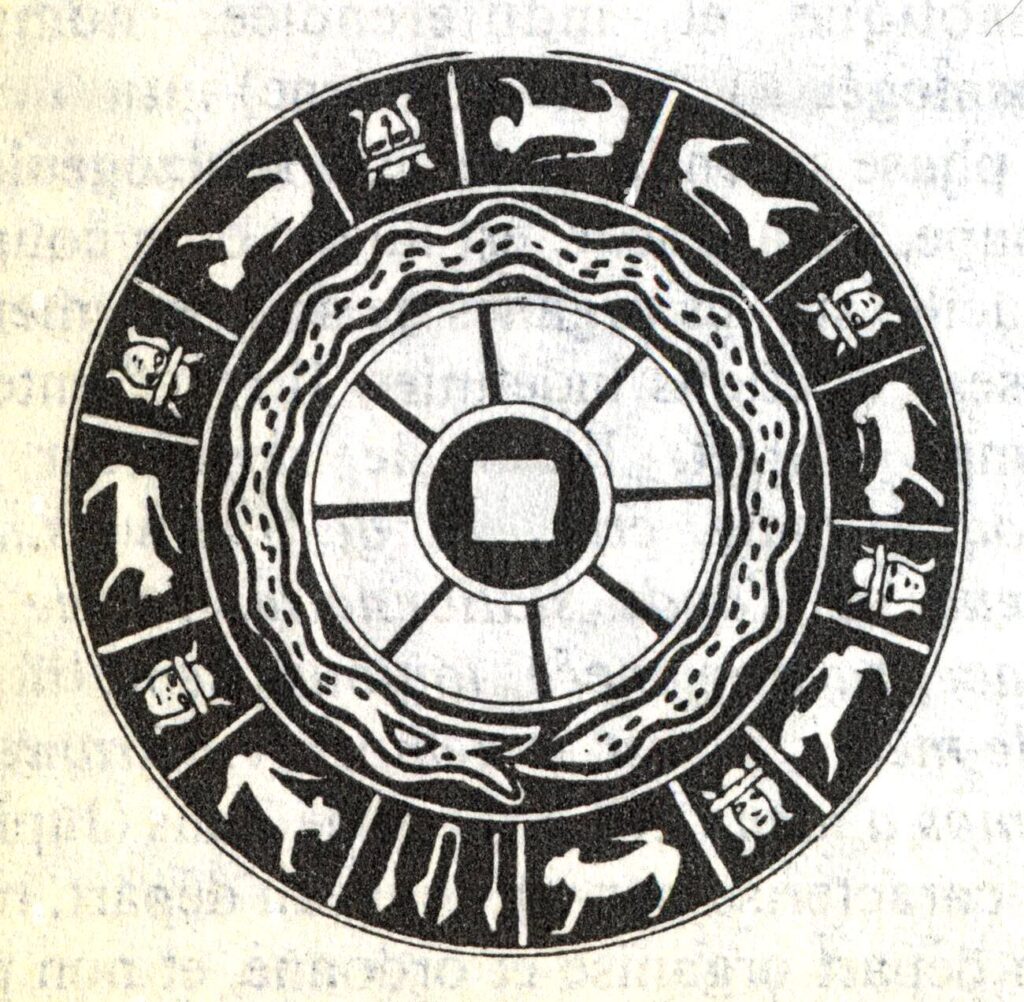
In Benin’s bronze world-disc, the Ouroboros encircles the Earth like a protective boundary.
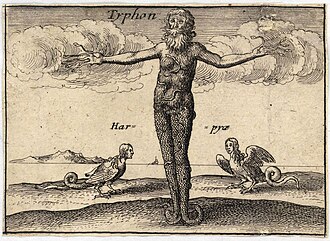
In Greek myth, Typhon’s serpent-body is so huge his head brushes the stars.
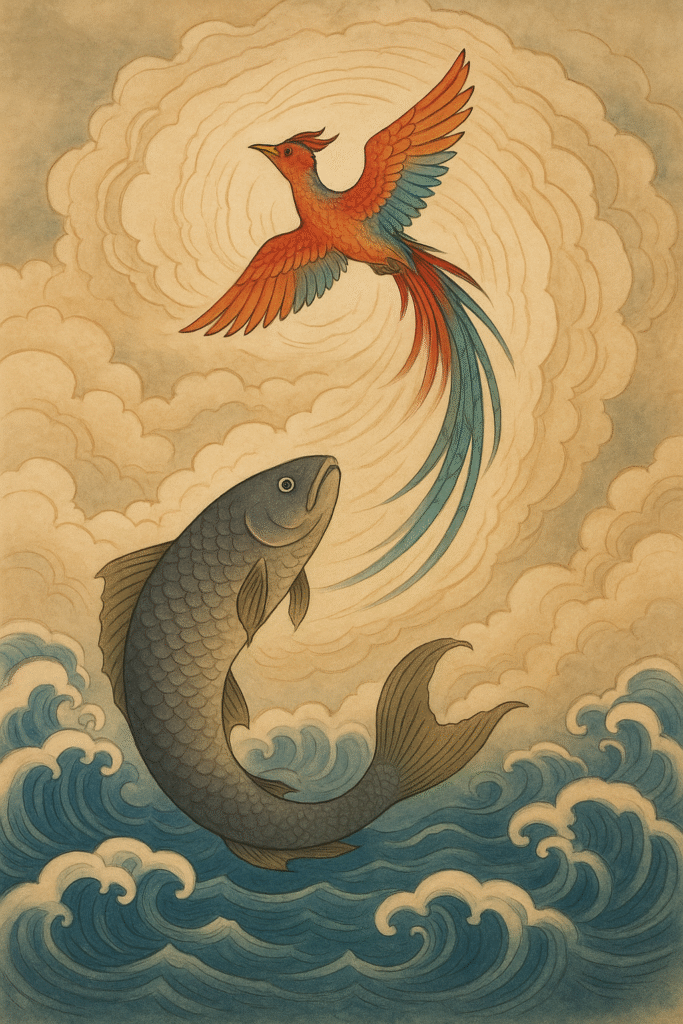
In the Chuang Tzu, a cosmic fish becomes a bird and spirals into the sky in a single breath.
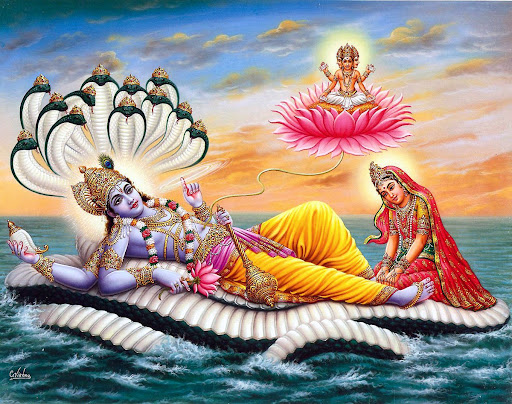
In Hindu myth, Sesha has a thousand heads and floats on cosmic waters as the bed of Vishnu.
In Amazonian tradition, Ronin can be seen as thin as a thread and large enough to wrap around the planet.
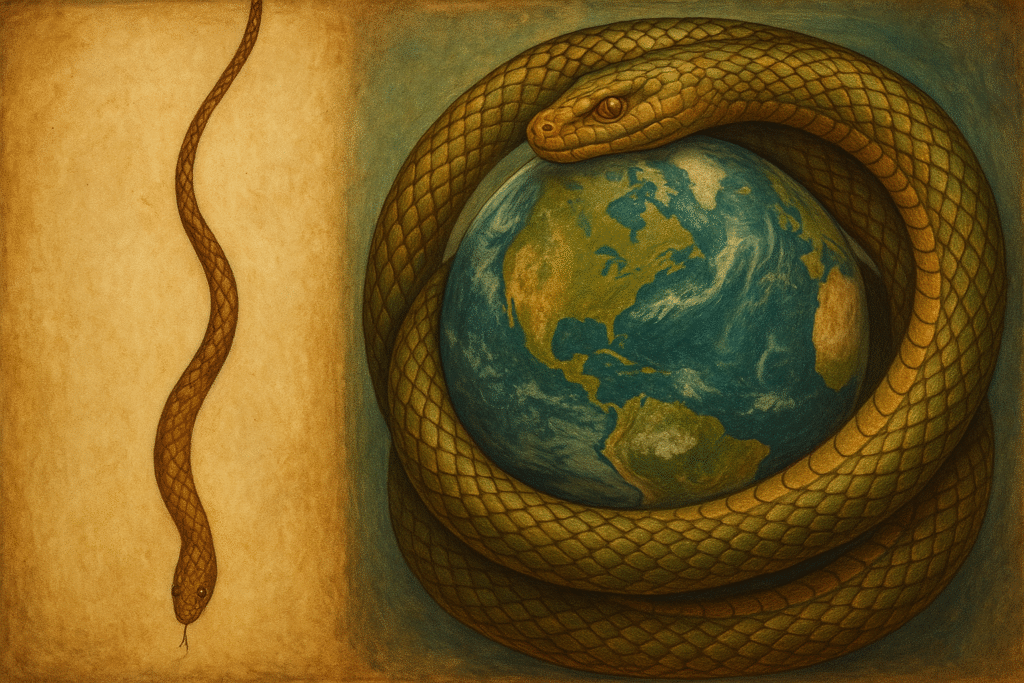
It’s symbolic fidelity.
Mythic serpents expand and contract because they are describing a principle that can be enormous in total scale yet tiny in structure.
A force that:
- coils tightly
- stretches indefinitely
- lives in water
- divides and remains whole
- changes form to express different truths
Myth is doing what myth does best:
compressing a complex dynamic into a simple visual language.
The Paradox of Wings, Feet & Fire
Myth-makers were symbolic engineers. When they gave serpents wings, legs, feathers, or fire, they were adding function — a hint to the reader that the serpent represents something that cannot stay in one category.
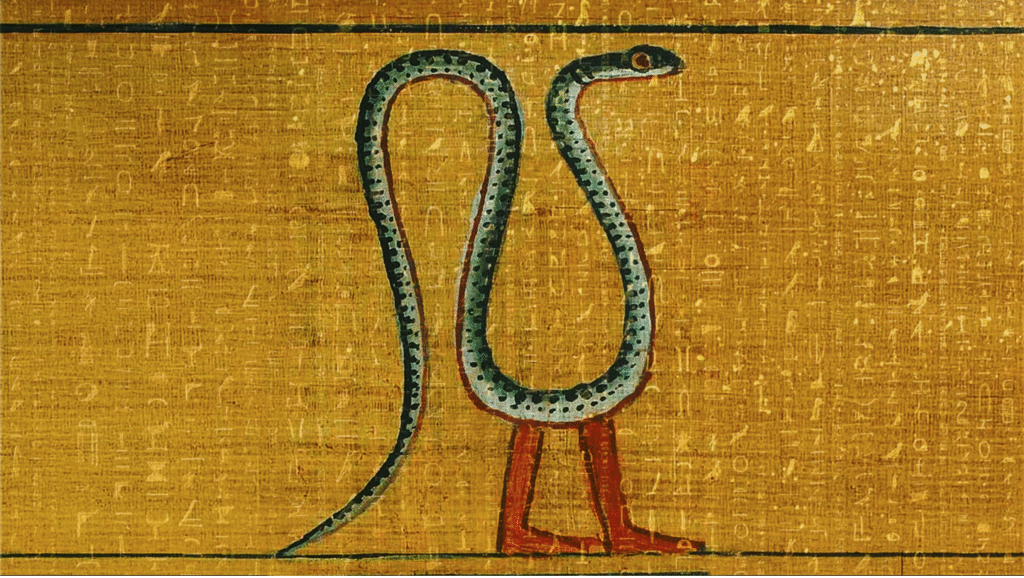
A serpent with human feet isn’t biologically plausible — it’s a philosophical illustration. It says:
“This force moves like a serpent but acts with intention.”
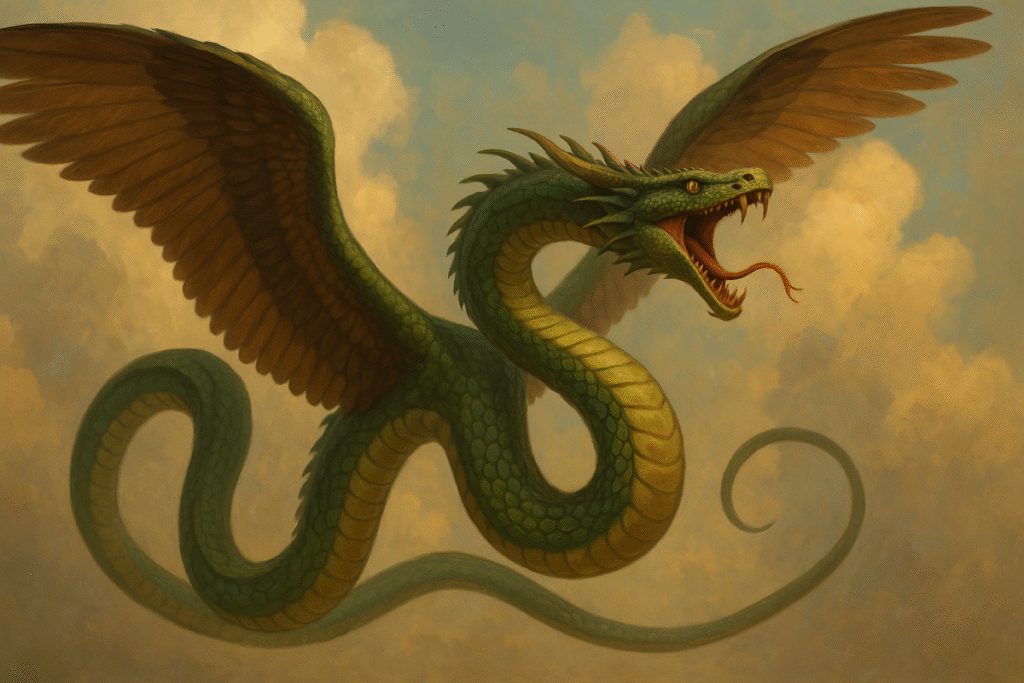
A winged serpent says:
“This principle bridges realms — it rises as easily as it falls.”
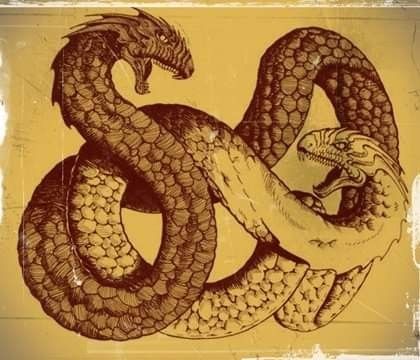
A two-headed serpent says:
“This being sees in both directions. It holds dual knowledge.”
And when the serpent evolves into a dragon, the paradox becomes even clearer.
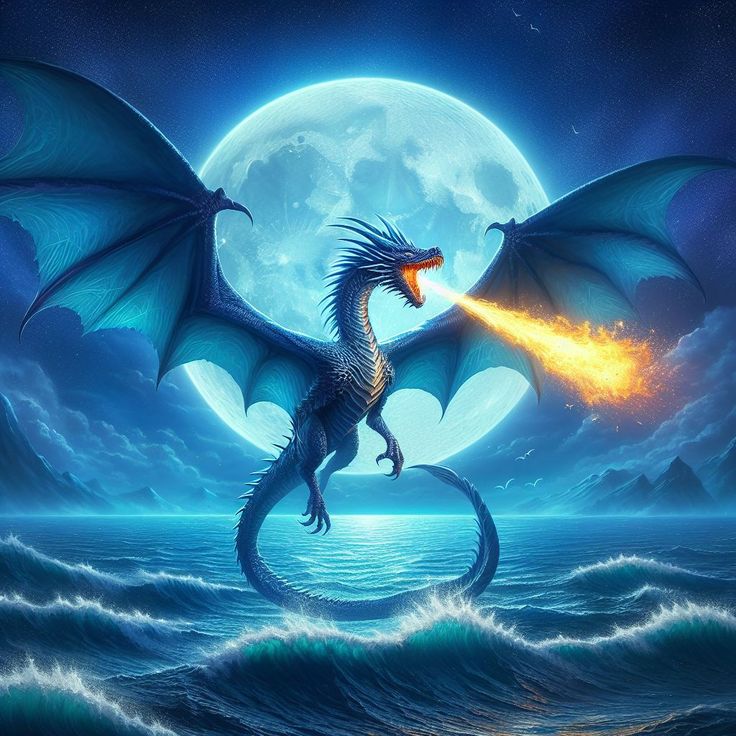
Dragons:
Threaten destruction but also ensure protection
Live in water but breathe fire
Crawl on the earth but fly into the sky
Guard treasures but also symbolize wisdom
The Dictionary of Symbols calls the dragon “the union of two opposed principles.”
This is myth’s way of pointing at the behaviour of creation itself — contradictory forces held together in one form.
The Ouroboros: Where Beginning Meets End
Of all serpent-symbols, none is more haunting than the Ouroboros — the snake biting its own tail. It closes a circle, swallowing itself as it creates itself. That image communicates ideas that would take pages to explain in words:
Beginnings feed endings
Endings birth beginnings
Creation is self-renewing
The whole contains itself
Nothing is wasted, nothing disappears
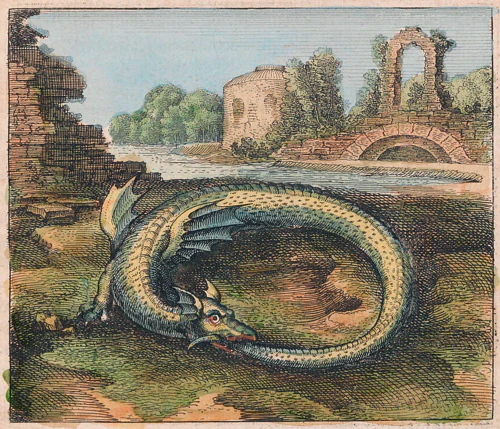
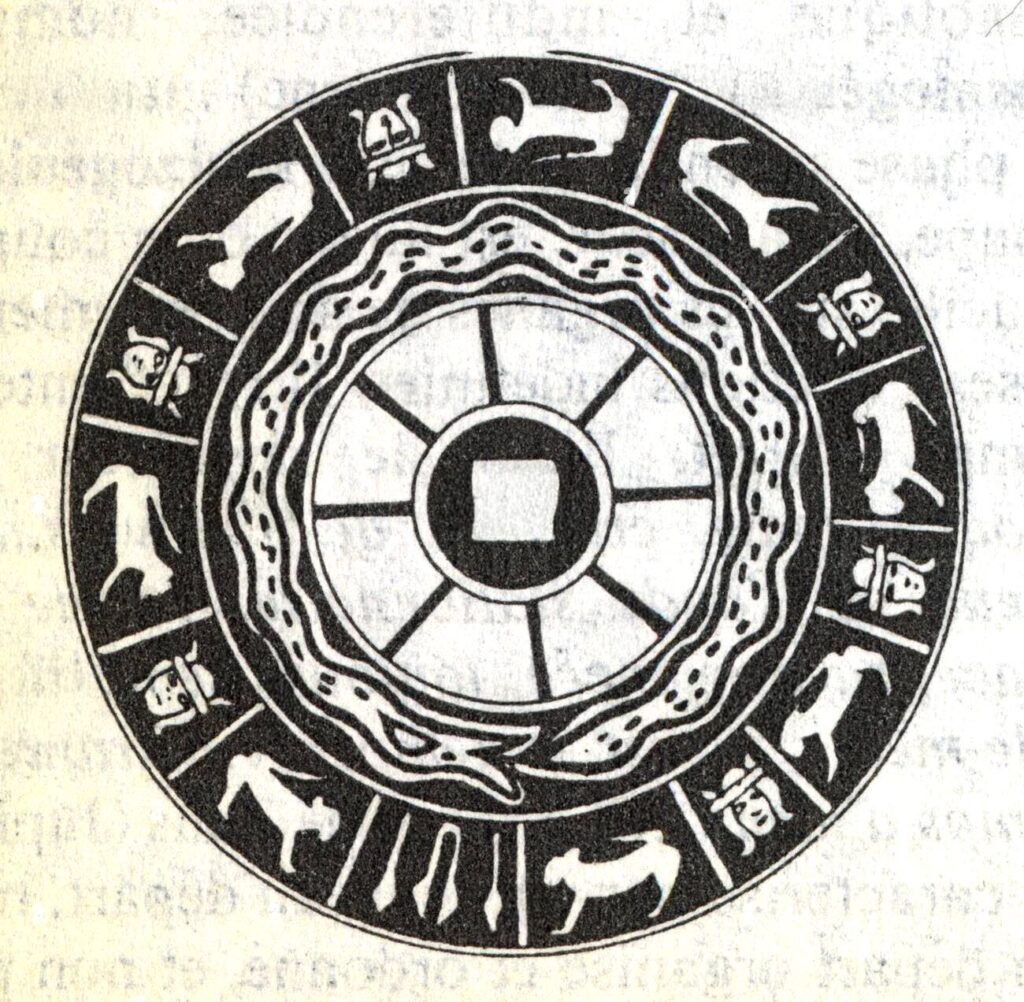
One of the oldest African world-images — a bronzed disc from Benin — shows the Ouroboros surrounding the Earth.
A frame that holds everything inside.
Dragons as Currents of Energy
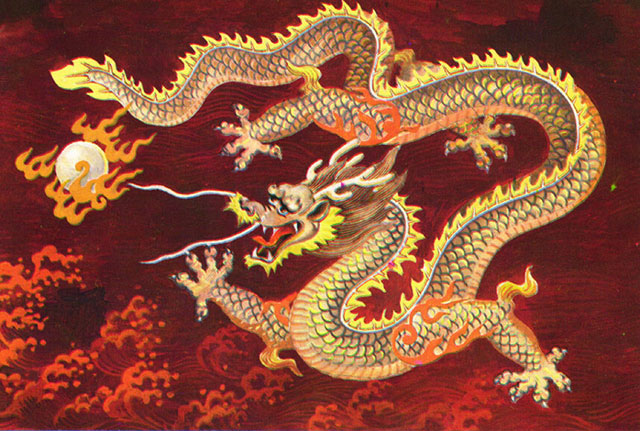
Travel to China and the serpent becomes the dragon — an atmospheric force. Chinese dragons coil through clouds, churn rivers, summon rain, and weave between realms like living currents. They are never rigid; they are always in motion. That fluidity is the point.
A dragon is a serpentine principle stretched across the sky — the natural world behaving in spirals and arcs, as if responding to an invisible rhythm.
Sesha: The Serpent That Supports Reality
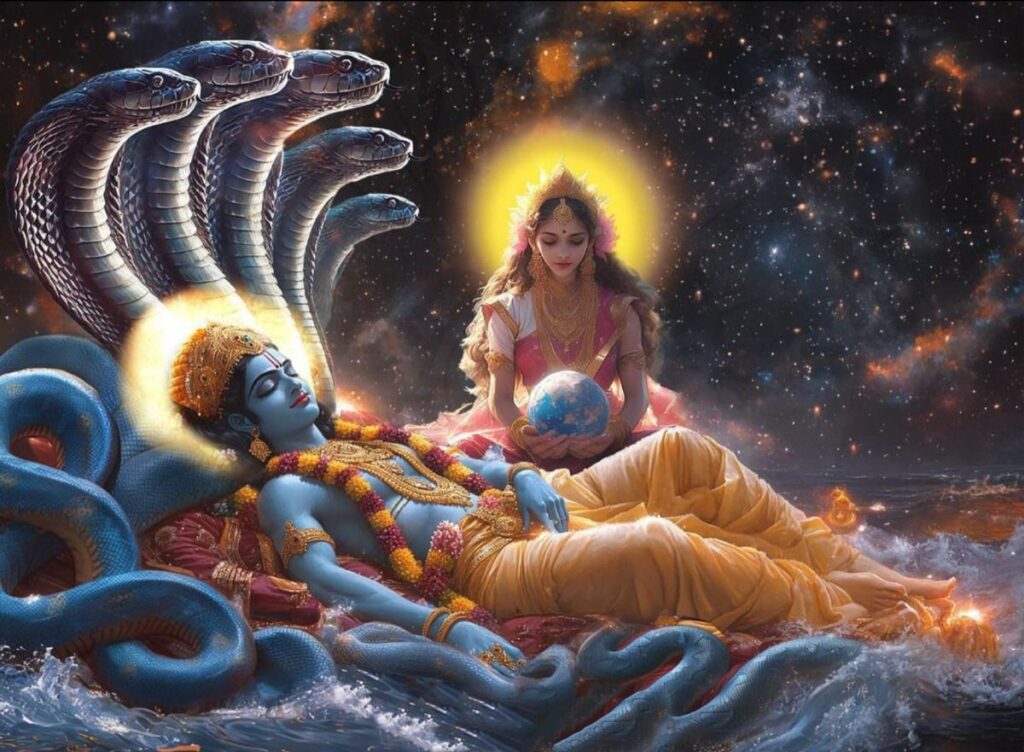
In India, Sesha’s thousand heads carry the universe. Vishnu reclines on this serpent in the cosmic ocean; creation arises as Vishnu dreams. The point is simple: The serpent is the structure the world rests on.
A serpent with many heads means infinite possibilities; many ways of knowing; many directions from which creation can unfold.
Amazonia’s Ronin: The Serpent That Surrounds
Finally, return to the Amazon.
Here, serpents are living presences encountered in visions, rituals, and stories passed from elder to apprentice.
Shamans describe Ronin, the great cosmic anaconda, as:
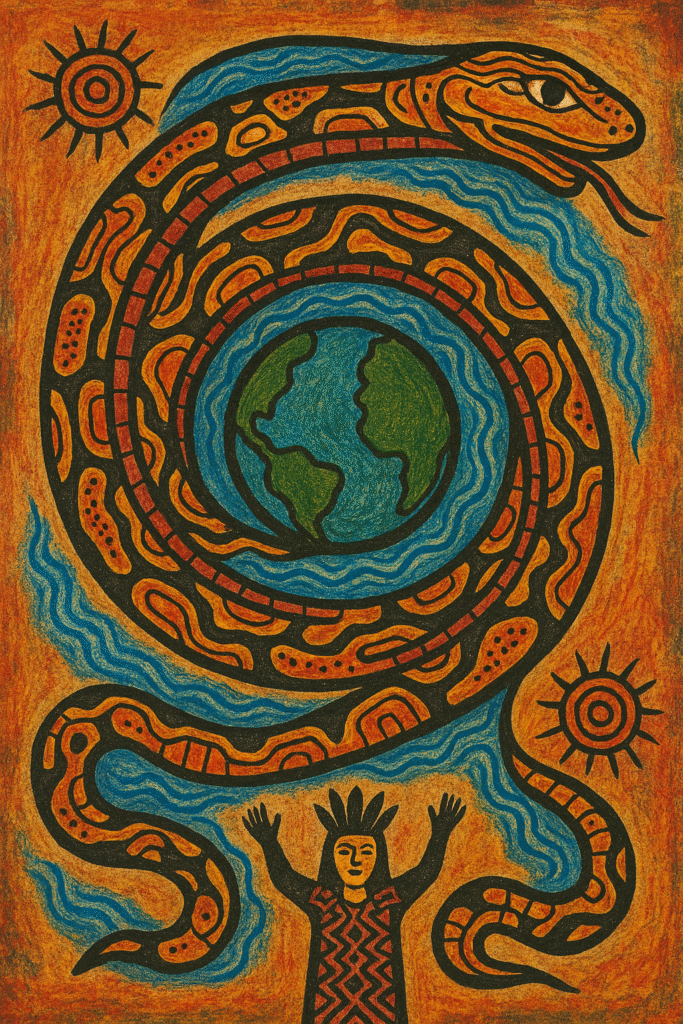
A being that encircles the Earth
Half in deep waters, half above them
A force that both contains and shapes the world
A teacher that shows itself differently depending on who looks
Anthropologists who asked shamans to explain Ronin found that the shamans preferred to draw instead of speak. The drawings varied — fluid, shifting, evolving — because the serpent itself was understood as a master of transformation.
This flexibility is essential. A creative force cannot have one fixed shape. So it moves between forms the same way water moves between river and rain.
THE WORLD AXIS: LADDERS, ROPES & THE TWISTING PATH BETWEEN REALMS
If serpents are the horizontal symbol — coiling across land, sky, and sea — then the world’s cultures also imagined a vertical symbol.
Something that links the realms.
Something you move along, not around.
This vertical symbol shows up everywhere, so consistently it might as well be humanity’s second heartbeat:

- A ladder to the sky
- A tree connecting worlds
- A rope, vine, or beam of light
- A staff coiled with serpents
- A pillar that holds existence in place
Different names, same function:
a pathway between the visible and the invisible.
Myth calls it the axis mundi — the world axis.
Biology, though it didn’t intend to, eventually described something uncannily similar.
But let’s walk into the forest of symbols first.
Wherever You Look, the Axis Appears
Mircea Eliade — who spent decades studying world myths — noticed something strange: nearly every culture, no matter how isolated, describes a central vertical link between realms.
You can find it in:
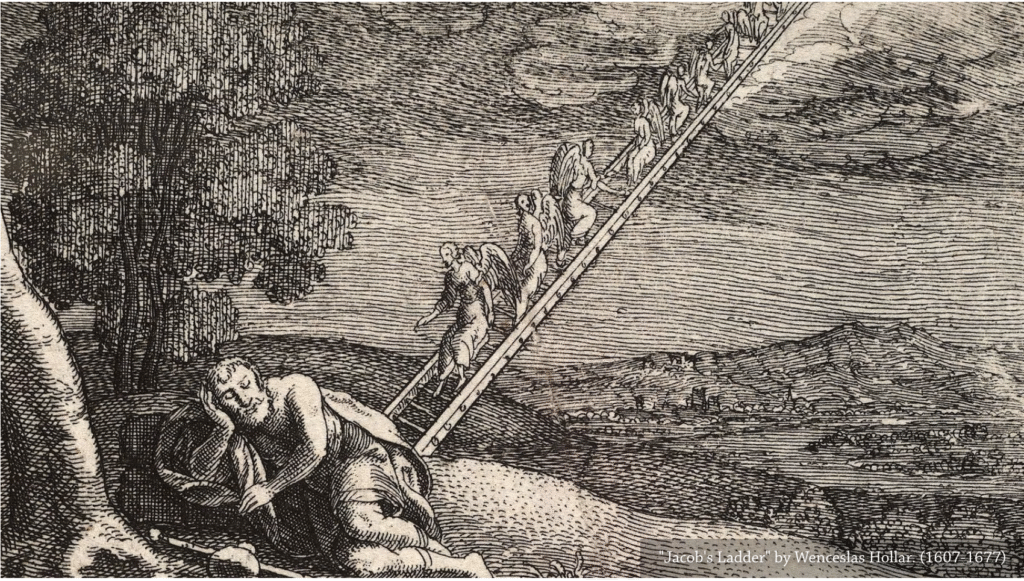
Jacob’s ladder in the Hebrew tradition
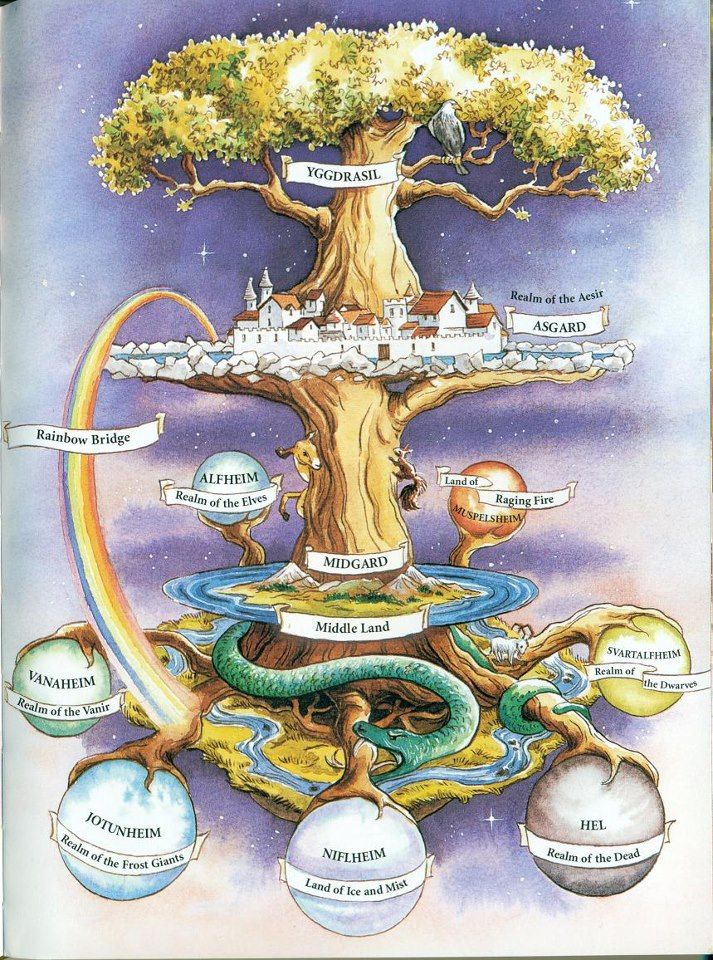
Yggdrasil, the Norse tree linking nine worlds
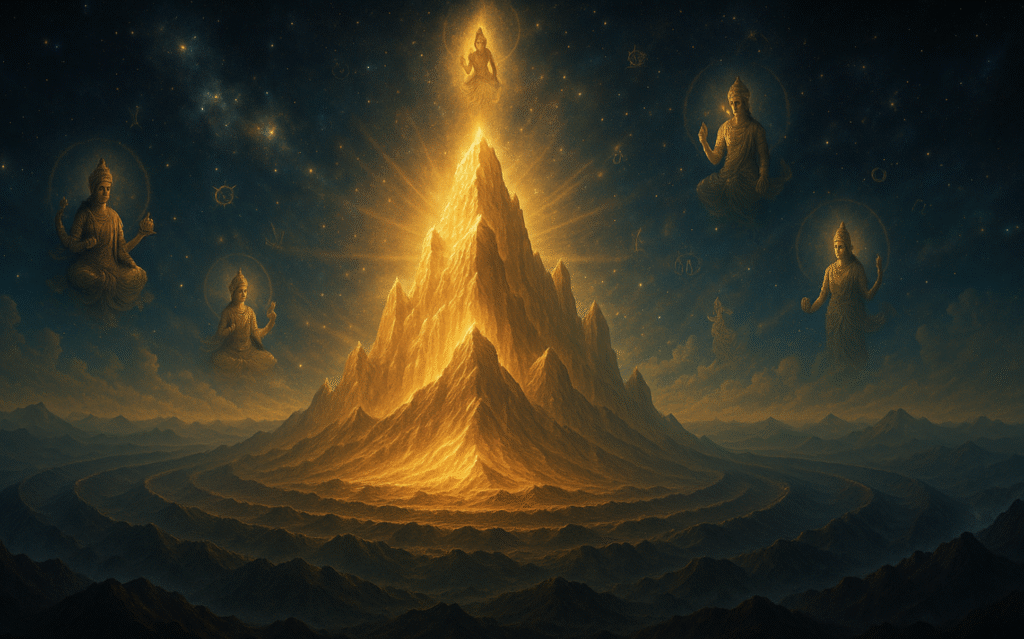
Mount Meru of the Hindu cosmos, climbed by gods and demons
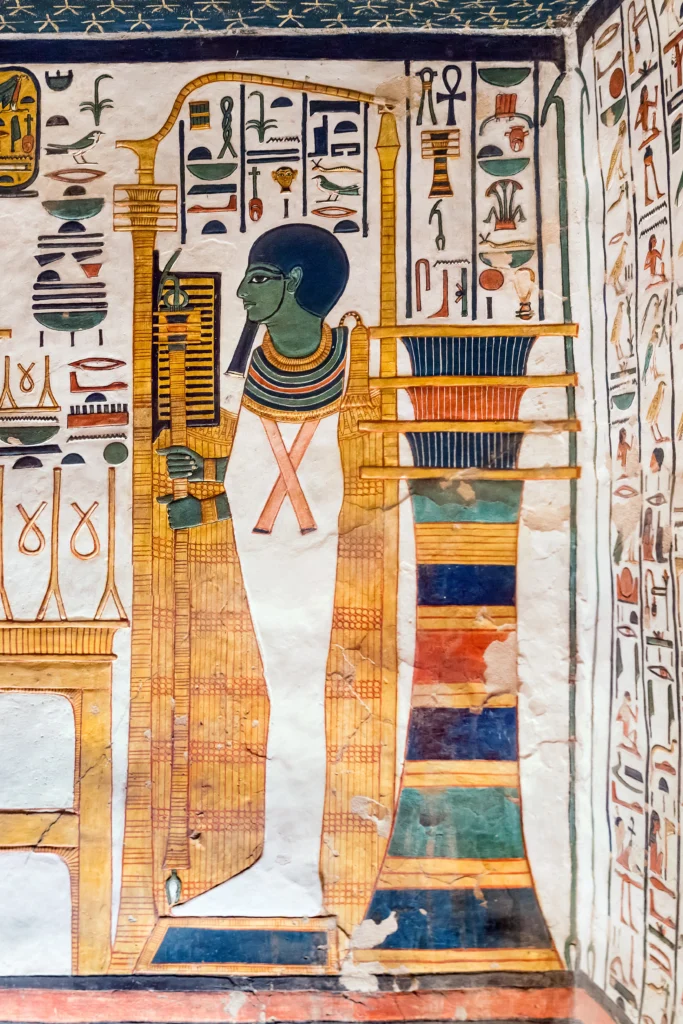
The Djed pillar of Egypt, the backbone of the universe
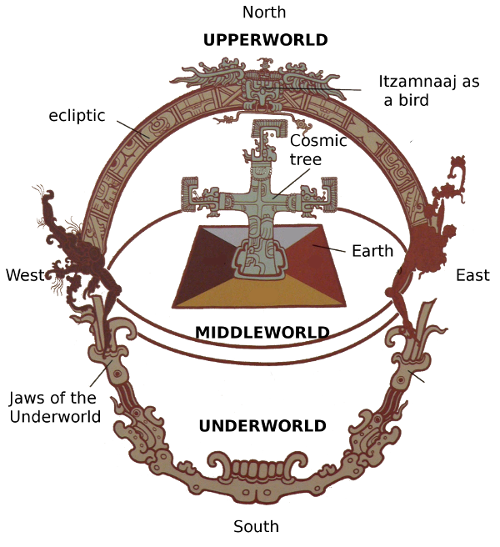
The Mayan World Tree, its roots in the underworld and branches in the sky
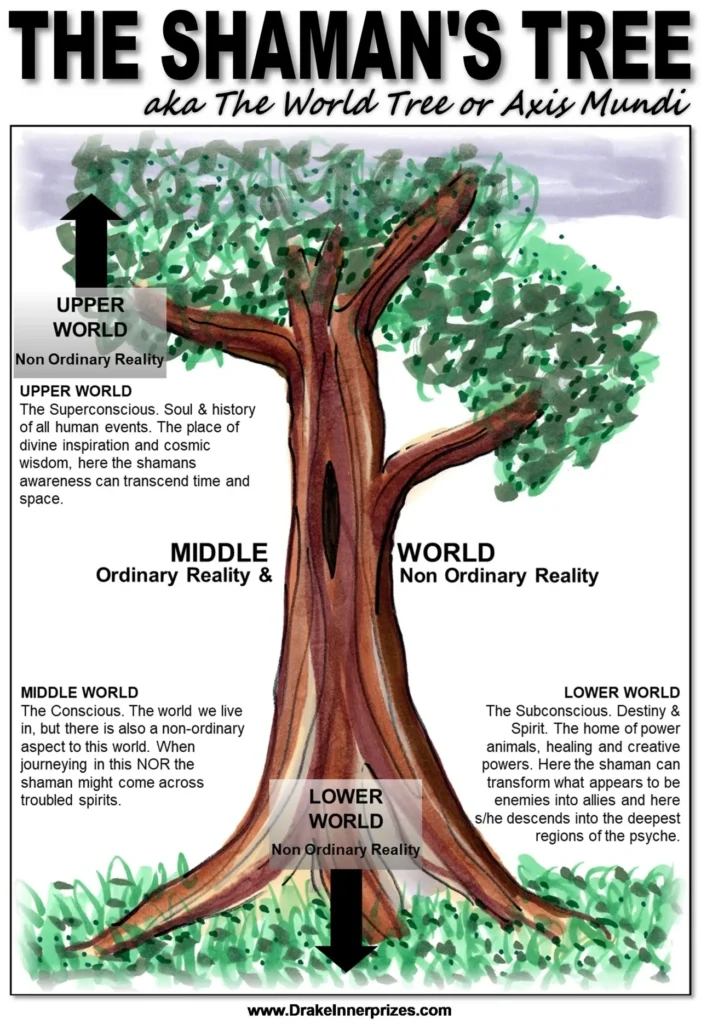
Shamans’ spirit ladders or tree, climbed during trance.
None of these cultures were exchanging notes. But they were seeing — or sensing — the same structure.
A straight line connecting above and below. A path of movement, learning, healing, communication.
The Amazon Makes the Axis Literal
Outside academic books, the axis isn’t abstract at all.
In the Amazon, several tribes insist that Earth and sky were once physically connected by a rope. A vine. A plant. A vertical bridge.
The Ashaninca call it inkiteka — the sky rope. They point to an actual vine with stepped markings that imitate the structure of that cosmic cord.
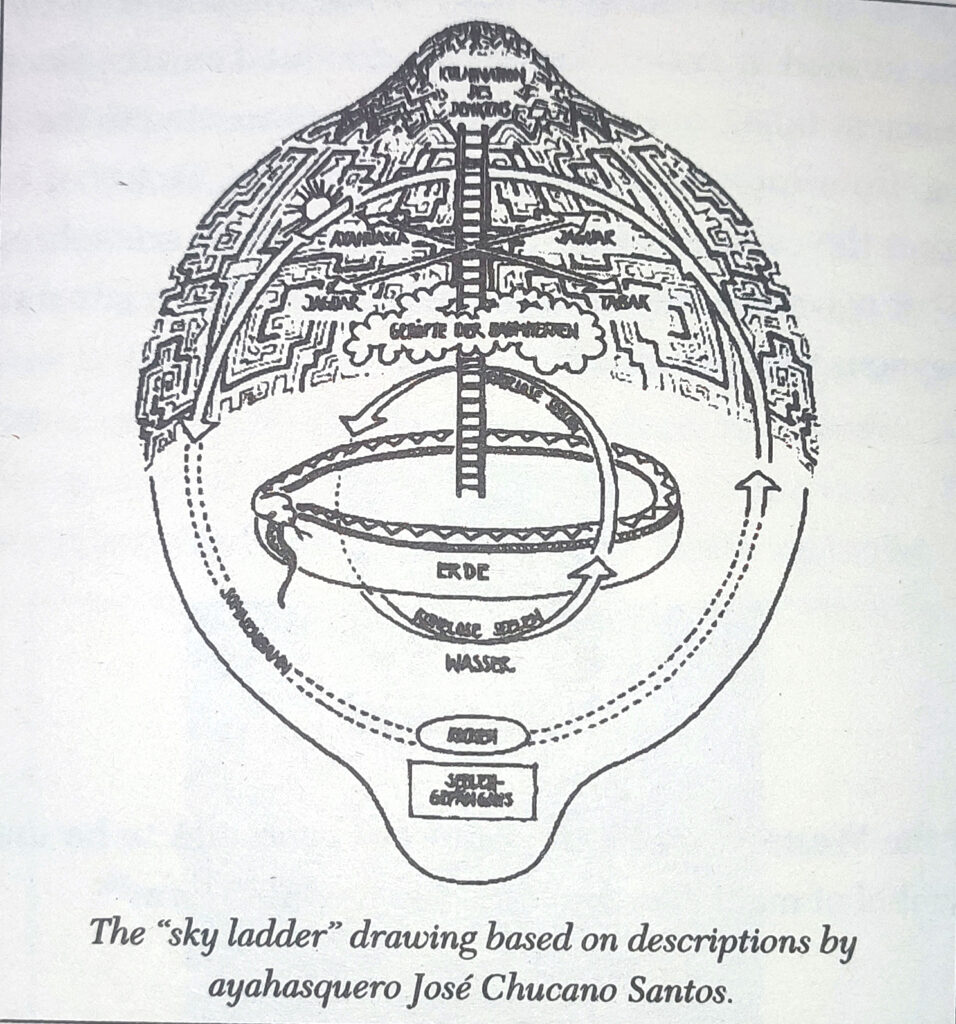
Thousands of kilometres away, the Taulipang describes the same sky rope, with the same stepped pattern, and identifies the same plant.
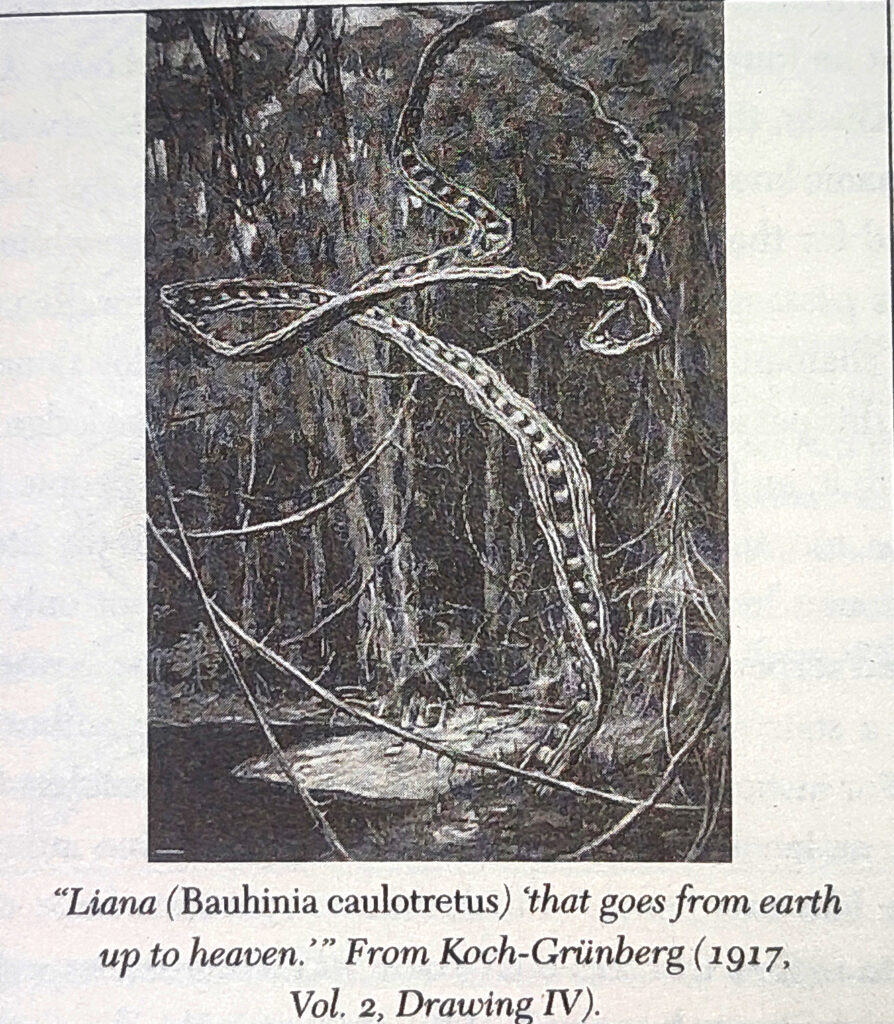
When two unrelated cultures pick the same vine as the model for the world’s connecting axis, you know you’re not dealing with coincidence — you’re dealing with recognition.
Something in the shape spoke to them.
Shamans Don’t Climb — They Shift
When Amazonian shamans “climb” this rope, they’re not grabbing the vine with their hands. They are shifting awareness.
Their ascent happens through rhythmic chanting, breath-work, drumming, ayahuasca and focused intention.
During such journeys, the axis appears as a glowing ladder, a spiralling rope, a vine lit from within, a cord vibrating with energy or a staircase woven from light.
Direct experience, in their worldview.
Every rung, every twist, every shimmer is a doorway to knowledge — healing knowledge, ancestral knowledge, nature’s hidden mechanics.
They aren’t climbing wood or rope. They’re climbing information.
And that is exactly where the story begins to tilt toward biology.
Biologists Use the Same Metaphors Without Realizing It
This is one of the most delightful alignments in this entire exploration: molecular biologists — without knowing the myths — describe DNA using the same imagery shamans use for the world axis.
They call DNA:
A rope of information
A ladder twisted into a spiral
A vine of nucleotides
A staircase of paired bases
A double-stranded cord
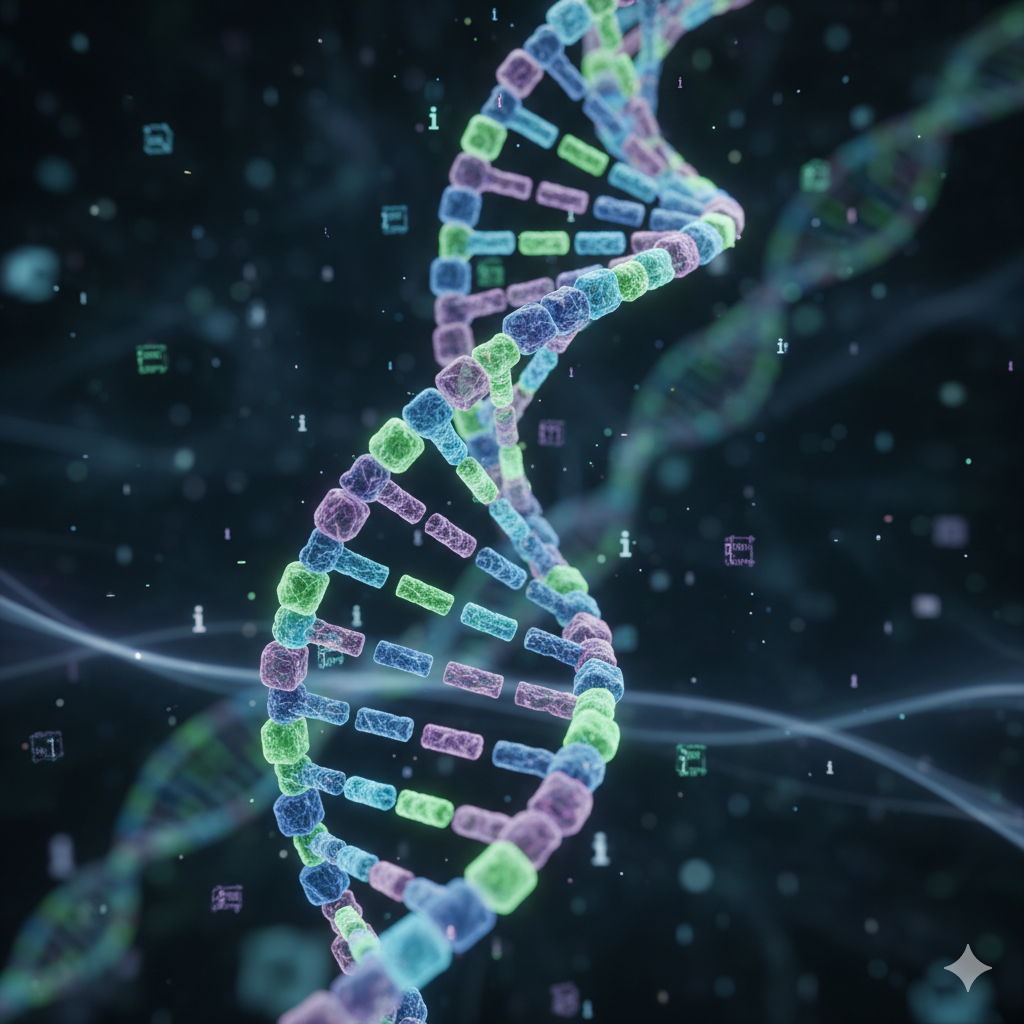
Maxim Frank-Kamenetskii, one of the world’s leading biophysicists, wrote:
“In a DNA molecule, the complementary strands twine around one another like two lianas.”
Two jungle vines. Entwined. Runged. Spiralling upward.
Exactly like the shamanic sky rope.
Shamans described it through vision. Biologists described it through microscopes.
The structure — a twisted ladder — is the same.
The Axis Often Comes With a Guardian
Across cultures, the world axis is not just a pillar standing alone. It is wrapped, guarded, or animated by a serpent:
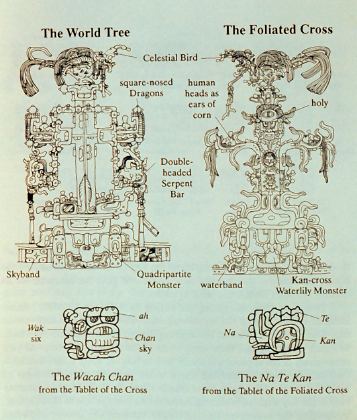
Quetzalcoatl spirals around the Mayan world tree.
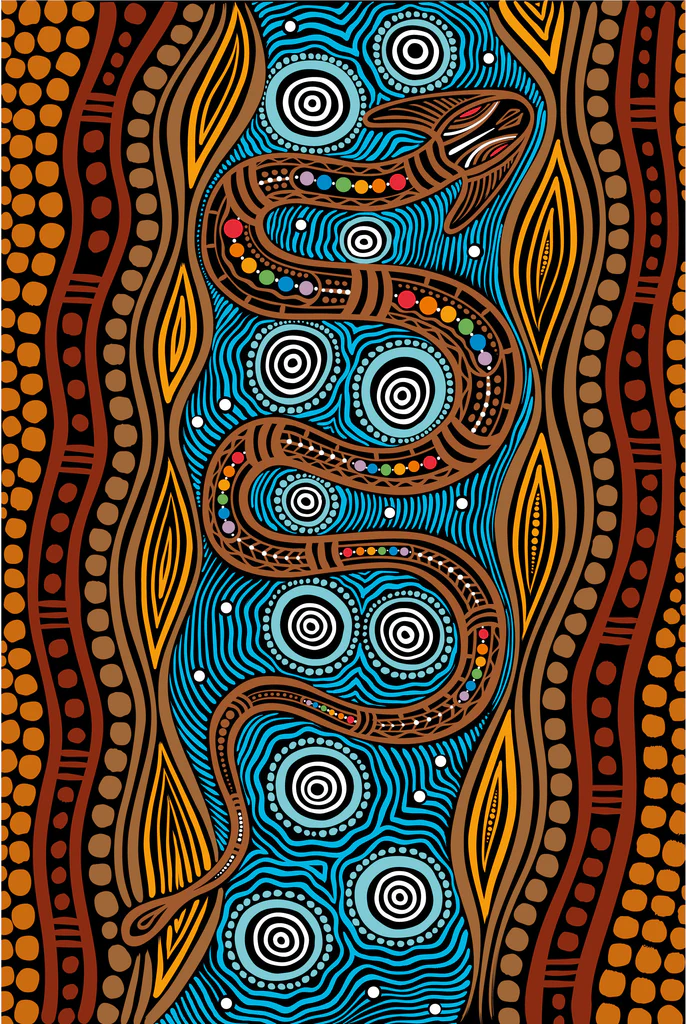
The Rainbow Serpent moves along the Aboriginal dream-path.
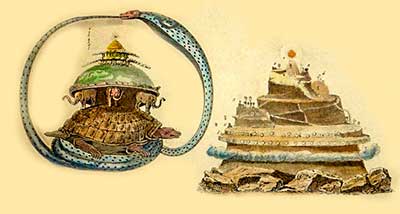
Naga spirits coil around Mount Meru.
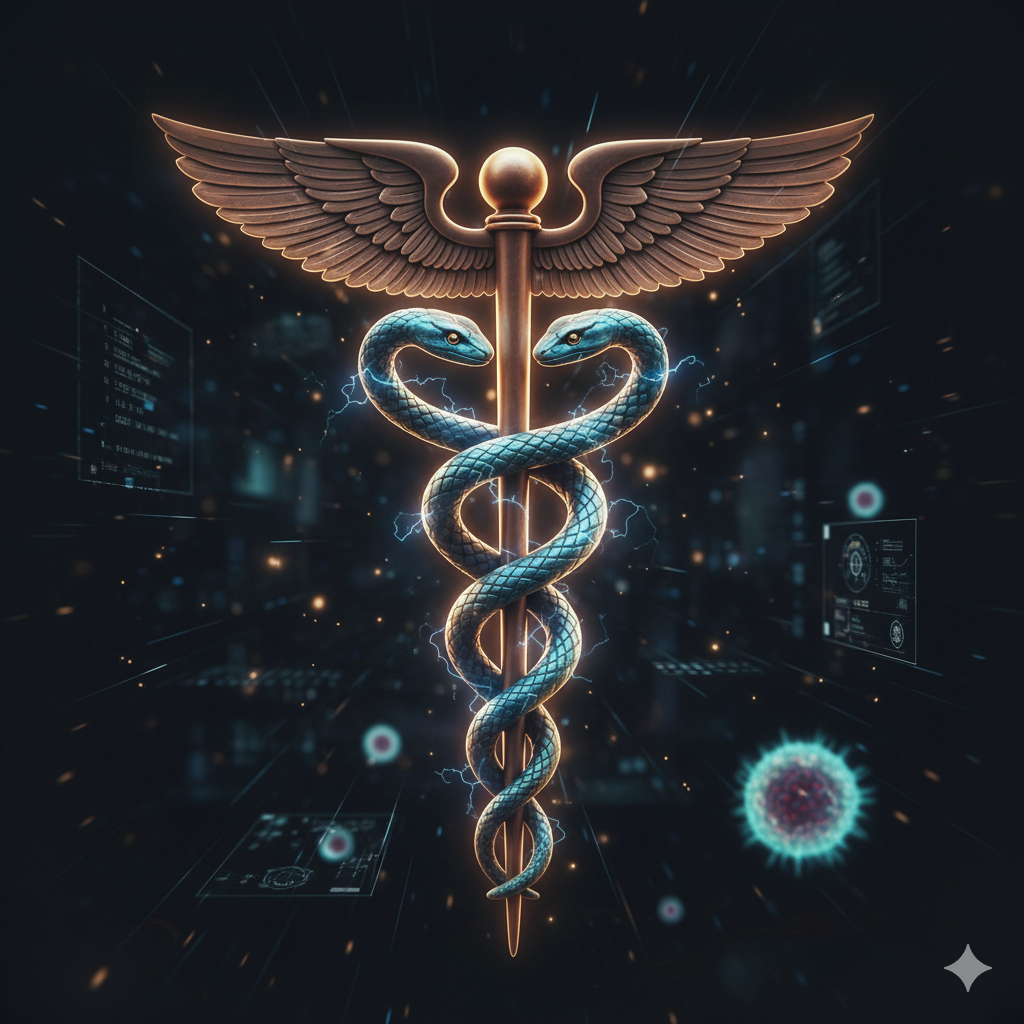
The caduceus pairs two serpents around a staff.
A vertical structure + dual serpents = the path of life and knowledge.
In the cell, the echo becomes uncanny:
The vertical backbone of DNA
The two serpentine strands wrapped around it
The rungs that carry coded meaning
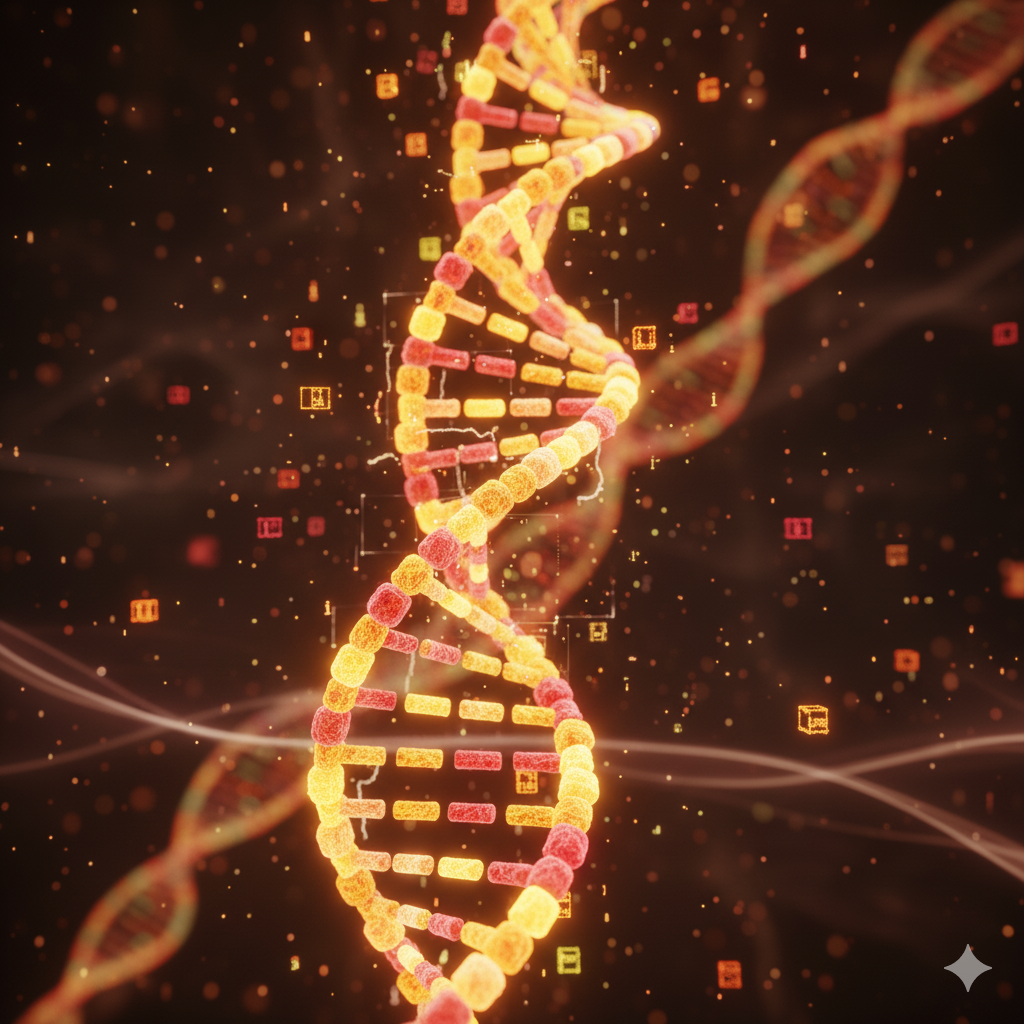
The symbolic world axis becomes the molecular world axis.
Same architecture. Different scale.
The Axis as a Teaching Tool
Shamans across the Amazon say the sky rope teaches them how the world is built through form.
Climb a little, and you learn a little.
Climb higher, and the song that teaches becomes clearer.
According to them, each rung is a piece of knowledge. Each loop is a memory. Each twist is a reminder that insight is never linear.
Science wouldn’t phrase it this way, of course.
But the principle is identical:
DNA contains layers of instruction.
Some are obvious.
Some are hidden.
Some activate only when the right “climber” — an enzyme — arrives to read them.
The metaphors align because the structure itself encourages that kind of thinking.
The Vine Itself Whispers the Secret
There’s one last detail that makes the Amazonian view almost eerie in its precision.
The ayahuasca vine — Banisteriopsis caapi — naturally grows as a double helix.
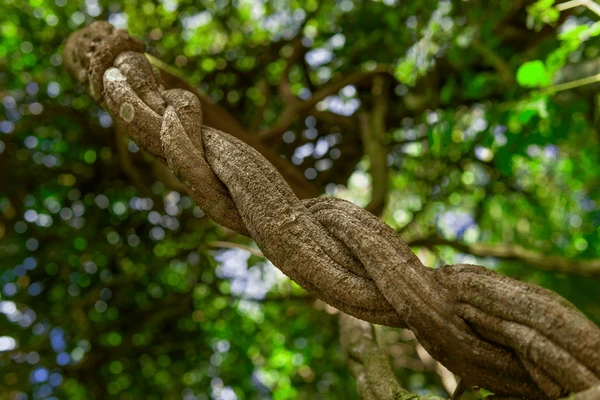
For shamans, this isn’t just interesting botany.
It’s why the vine teaches.
Why the vine instructs.
Why the vine reveals “the inside language of nature.”
When they drink ayahuasca, they report visions of spiralling patterns, double strands, ropes of light, threaded ladders, woven sequences and vibrating grids.
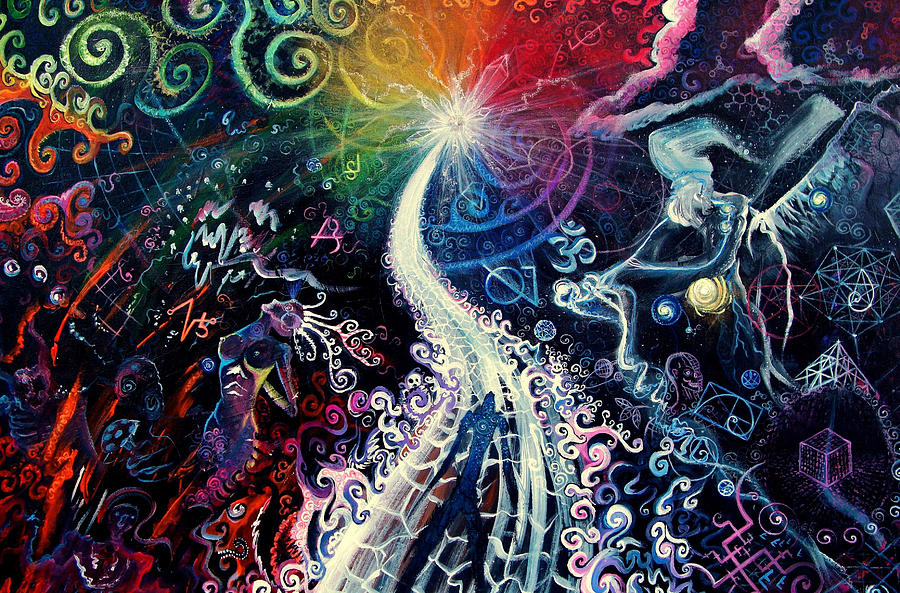
They’re describing experiences that resemble the structure of molecules.
Vision and biology meet in the same shape.
TWISTED LANGUAGE: HOW SHAMANS SPEAK IN THE SAME LOGIC DNA USES
By now, we’ve followed the serpent across myths, oceans, cosmic trees, and world-ropes.
We’ve climbed the axis.
But the Amazon holds one more strange parallel — one that doesn’t appear in shape or movement, but in speech.
Because when shamans enter altered states through ayahuasca, they don’t just see spirals.
They begin to speak in them.
Their language bends.
Their metaphors double.
Their words stop meaning one thing and begin meaning several things at once.
It is language woven the way vines weave — around a central meaning rather than straight toward it.
This “twisting” style of communication is called koshuiti — the language of visions.
And it mirrors the structure of DNA far more closely than you’d expect.
The Songs are a Code
Graham Townsley, an anthropologist who spent years with the Yaminahua people of the Peruvian Amazon, noticed something stunning:
Shamans sing in a specialized, secretive form of speech filled with metaphors stacked on metaphors.
This language:
- avoids naming things directly
- describes the world obliquely
- pairs two images to express one truth
- repeats patterns over and over
- hides meaning from uninitiated listeners
- reveals meaning only to those in the visionary state
A shaman explained it simply:
“Ordinary words crash into things. Twisted words circle around them.”
It’s a way of reaching knowledge from the side by resonance.
Everything Has Two Names — or Three — or Ten
In koshuiti, nothing keeps its everyday label.
- The night doesn’t “fall.” It becomes swift tapirs.
- Fish become white-collared peccaries.
- A jaguar becomes a basket.
- The forest becomes cultivated peanuts.
It sounds absurd until you realize what shamans are doing: They’re matching patterns.
A fish’s gills ripple like the white stripes of a peccary.
A jaguar’s coat resembles woven fiber.
Forest clearings open like peanut rows.
Night rushes in like a herd.
It’s perception through resemblance — finding hidden links between things.
It’s a way of saying: Meaning lives in pattern, not in blunt category.
DNA works the same way.
Twisting Is a Method, Not a Mistake
The Yaminahua use the phrase tsai yoshto-yoshto, literally: “language twisting twisting.”
The double twist is intentional.
Because twisting does two things:
- It creates a pair — a duality.
Two strands of meaning wrap around one another. - It conceals meaning inside the twist.
Only someone trained — or in the right state of awareness — can pull the threads apart.
Sound familiar? DNA – It..
Reveals instructions only to the right enzymes
Is double
Contains mirrored information
Stores meaning in paired sequences
Hides functions in non-coding regions
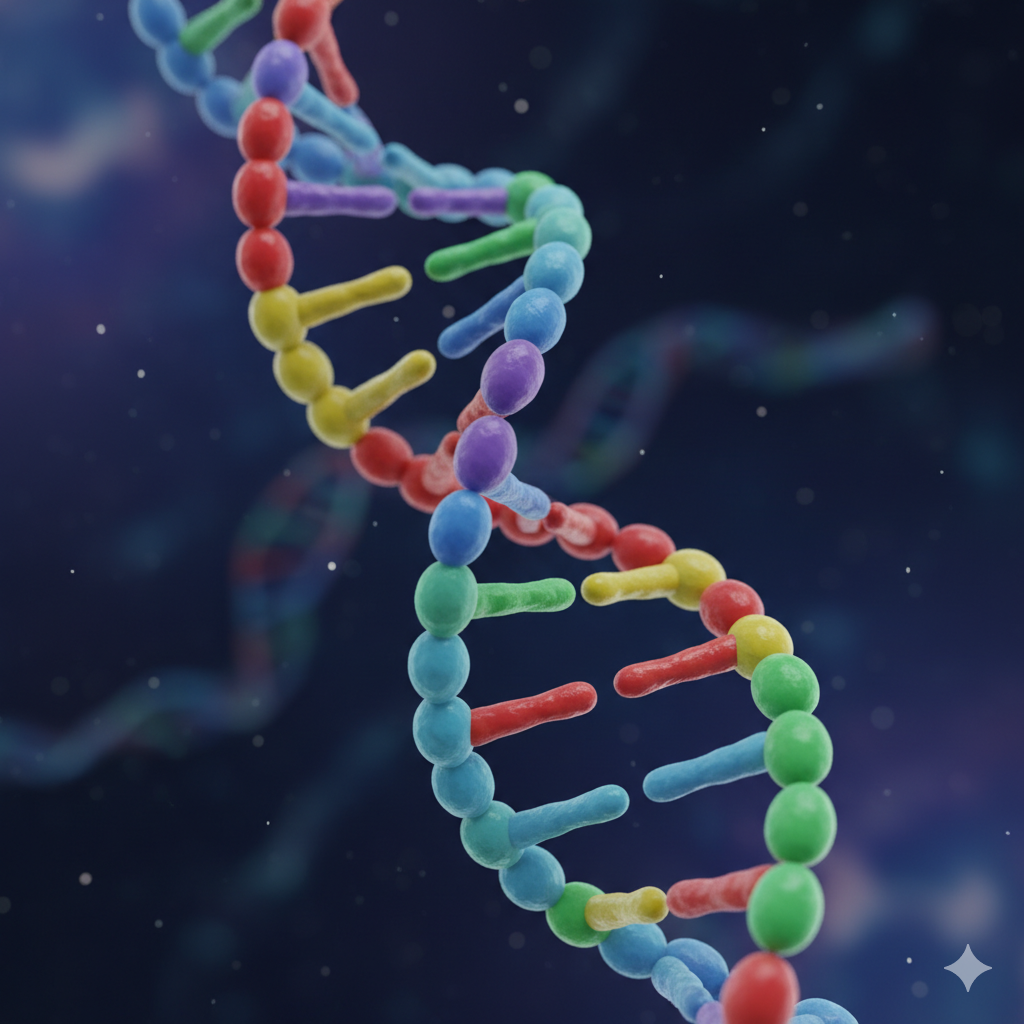
Shamanic speech and genetic code both operate through paired, spiralling logic.
One uses metaphors.
One uses nucleotides.
But both communicate by entwining two threads of meaning.
Repetition as Emphasis, Not Error
To an outsider, shamanic songs repeat phrases endlessly:
“Jaguar basket jaguar basket jaguar basket…”
“White-collar peccary white-collar peccary…”
But repetition isn’t filler. It’s amplification — letting the pattern settle, deepen, and shape perception.
In DNA, repetition does the same thing. Entire stretches of the genome consist of repeated sequences:
ACACACACACAC…
TTAGGGTTAGGGTTAGGG…
Repetition stabilizes the structure.
It tells the cell: This matters. Hold onto this. Build from it.
Just as shamans repeat to embed meaning in the listener’s consciousness, DNA repeats to embed instructions in the cell’s behaviour.
Two very different domains — one shared logic.
Mirrored Meaning: How Metaphor and Molecule Both Use Symmetry
Shamanic metaphors flip back and forth between images:
- forest ↔ peanuts
- night ↔ tapirs
- jaguar ↔ basket
Meaning isn’t in either image alone. It lives in the relationship between them.
DNA literally encodes meaning through relationships:
- A pairs with T
- G pairs with C
- the left strand mirrors the right
- one direction reads forward, the other in reverse
The structure is a conversation between two sides — a duet.
Shamanic language does this with pictures;
DNA does it with molecules.
Both treat meaning as something relational, not singular.
Hidden Meaning Is a Feature, Not a Bug
The most startling overlap lies in how both systems bury messages.
In shamanic speech:
Most words don’t convey meaning directly — they point to it indirectly, through images that must be interpreted with inner vision.
In DNA:
97% of the genome regulates, shapes, signals, organizes, or holds ancient memory.
Both have a surface layer that looks like nonsense, and a buried layer that experts — shamans or enzymes — can decode.
To outsiders:
- koshuiti sounds like gibberish
- junk DNA looks like static
But both are structured.
Both are intentional.
Both influence the system profoundly.
We simply don’t fully understand the language yet.
A Language Only Understood in Another State
Non-shamans do not understand koshuiti. Even fluent speakers of Yaminahua can’t follow the songs unless they train in the shamanic arts or drink ayahuasca.
In the same way:
A human looking at DNA sees letters, not meaning. Only specialized enzymes — in the right biochemical conditions — can “read” the code.
Two languages that only reveal their truth when approached correctly:
- the right state of mind
- the right state of matter
Twisting Meaning Into Being
One shaman told Townsley:
“To speak properly to the spirits, the words must be twisted. Straight speech is too hard. Twisted speech is soft — it circles truth so you can see it.”
Replace “speech” with “genetic code,” and the sentence still works.
DNA is not a straight instruction manual.
It circles meaning, disperses it, repeats it, hides it, layers it, spirals it.
It doesn’t shout instruction. It weaves instruction.
Just like the shamans do.
Why Does This Matter?
Because this parallel — the twisted, paired, patterned nature of both shamanic language and DNA — is not about proving ancient people “knew” molecules.
It’s about recognizing that patterns in reality echo across different ways of knowing.
Myths see it.
Visions see it.
Shamans sing it.
Cells encode it.
The structure of life seems to express itself in spirals, pairs, repetitions, metaphors, twists — whether in music, ritual, or the nucleus of a cell.
And this brings us to the next layer:
the “junk DNA” puzzle — the enormous, mysterious, pattern-filled space inside the genome that behaves more like mythic language than mechanical code.
THE GREAT GENOMIC WILDERNESS: PATTERNS, REPETITION & THE MYSTERY OF “JUNK DNA”
Let’s step inside the cell — into the territory modern science calls the genome.
The genome is the full instruction manual for building and running a living thing.
It’s like a huge library of recipes inside every cell, telling the body how to grow, repair, function and stay alive.
Every plant, animal and human has a genome — and it’s written in a special four-letter code (A, T, G, C).
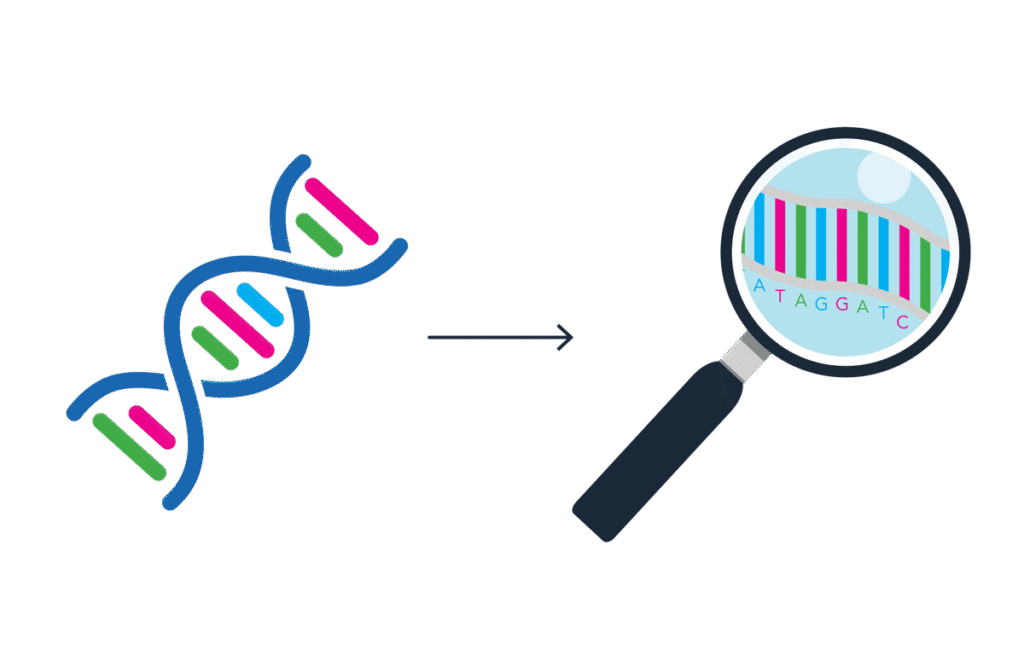
And this is where the parallels between mythic symbolism and molecular reality grow even stranger, because the genome doesn’t look like a neat instruction manual.
It looks like poetry. Confusing, repetitive, symbolic poetry.
In fact, most of it looks like nonsense — until you learn how to read it.
A Library That Refuses to Be Simple
Every human cell carries a full library — 3 billion letters of genetic text from your mother, 3 billion from your father.
Six billion letters in total.
But here’s the twist: Only 3% of that entire library clearly describes how to build you.
Everything else — 97% — looks cryptic.
- repeats with no obvious function
- mirrored fragments
- segments that read the same backwards and forwards
- sequences copied thousands of times
- long stretches of silence
- former viruses buried like fossils
- pieces of code that turn other pieces on or off
This baffled early scientists so much that they gave up and called it “junk DNA.”
Imagine if you opened a sacred text and declared the parts you didn’t understand “junk.”
That’s more or less what happened.
But the deeper scientists go, the more this so-called junk starts behaving like a language — layered, symbolic, and patterned.
Almost mythic.
A Third of Your Genome Is Made of Repeats
If you climb high above the genome and look down, it resembles an endless chant.
A third of it is made of repeating patterns like:
ACACACACACACACAC… or TTAGGGTTAGGGTTAGGG…
These patterns repeat: hundreds of times, thousands of times, sometimes half a million times
A biologist sees this and thinks: “Why does the genome repeat itself so obsessively?”
A shaman sees this and says: “Of course it repeats — repetition stabilizes the world.”
Because in shamanic songs, repetition is not a flaw. It’s the mechanism that makes a vision take shape.
In myth, repetition is how creation holds itself together.
In DNA, repetition:
- controls how chromosomes age
- safeguards essential regions
- shapes when genes wake up
- signals where structures fold
Repetition is architecture.
Mirrors Hidden Everywhere
Then there are the palindromes — sequences that read the same forward and backward:
GAATTC
↓ ↑
CTTAAG
These mirrored sequences function as:
- folding points
- hinges
- switchboards
- signals for enzymes
In mythic speech, mirrored metaphors do the same thing:
- jaguar ↔ basket
- night ↔ tapirs
- fish ↔ peccary
Meaning is stored in the inversion — not in the object itself.
The genome operates on the same principle: meaning is relational, not literal.
A sequence matters because of how it mirrors another sequence.
Myth and molecules both use symmetry the same way nature uses rivers: to carve channels of meaning.
Introns: The Hidden Valleys Between Instructions
An intron is the part of your DNA that doesn’t build anything directly — it’s the quiet space between instructions, like the pauses between words in a sentence.
Introns do not directly tell the cell what protein to build. Instead, they:
Regulate timing
Set context
Shape expression
Act as buffers
Influence the “music” of the genome
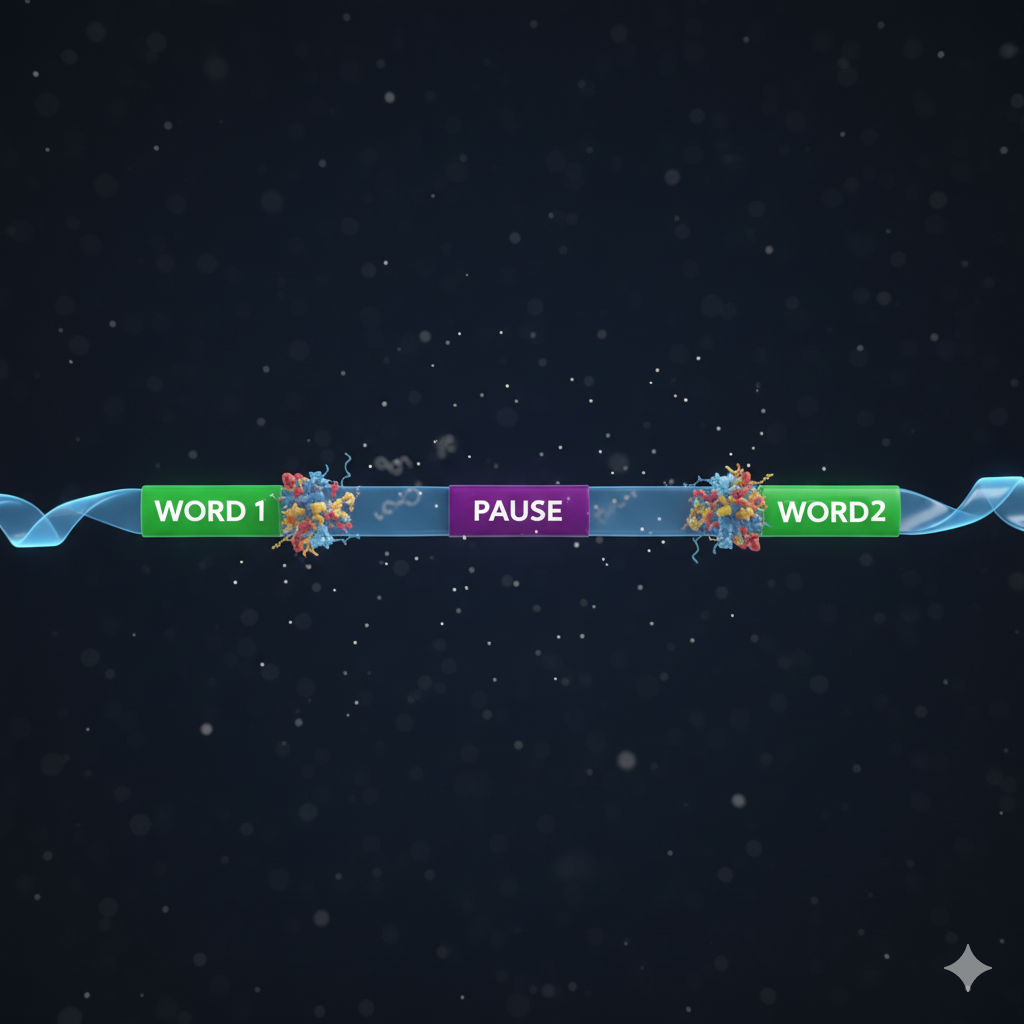
Some genes are 98% intron — meaning only 2% of the sequence directly codes for anything.
The rest is like a mythic story full of metaphors, where the literal message is tiny but the symbolic context is enormous.
The ancients would nod knowingly at this: truth is rarely in the surface words; it’s in the space around them.
DNA agrees.
Genome Editing: The Cell Performs Its Own Ritual
DNA is copied into RNA. Think of DNA as the original recipe and RNA as the handwritten note you take into the kitchen — you use the copy so the original doesn’t get damaged.
After DNA is copied into RNA, something beautiful happens — the cell edits the message.
Literally edits it.
It cuts out introns.
It stitches together exons (Exons are the parts of your DNA that carry the actual instructions — the words in the genetic sentence that your cells read and use to build life).
Sometimes it rearranges them into new combinations.
This process is called splicing, and it’s basically the cell’s way of interpreting a metaphor-filled message into something actionable.
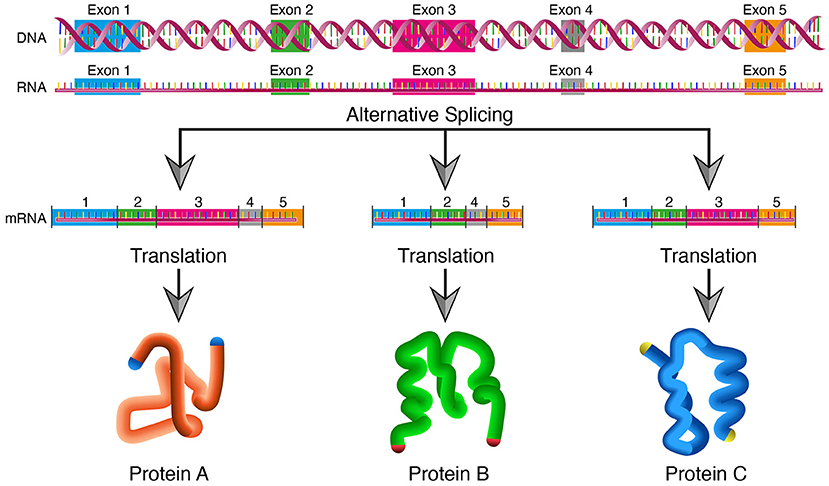
Different tissues interpret the same gene differently — like a myth that holds multiple layers of meaning depending on who reads it.
This is interpretation.
Shamans perform rituals to understand a hidden truth.
Cells perform splicing.
Different domains.
Same principle.
Why Scientists Ever Called It “Junk”
Because humans (especially scientists) love to label even what they don’t understand.
When early researchers saw:
- repeating motifs
- mirrored sequences
- non-coding regions
- fragments with unclear purpose
…they assumed the genome was full of evolutionary leftovers — biological noise.
But over the last 20 years, this “junk” has turned out to be:
- regulators
- timers
- organizers
- folding instructions
- developmental signals
- epigenetic switches
- stabilizers
- memory archives
Not junk at all. Just foreign to our current grammar.
Exactly the way shamanic language is foreign to untrained listeners.
We hear noise. But underneath is a system of deep order.
The Genome as a Mythic Text
Myths are structured containers for meaning. Their power lies not in the words themselves, but in:
- repetition
- metaphor
- symbolism
- inversion
- rhythm
- layered meaning
DNA is exactly the same.
- 97% is metaphor-like context
- 3% is literal instruction
- everything else is pattern
- structure holds meaning more than letters
- interpretation depends on the “reader”
Suddenly, the genome looks less like a machine and more like a living manuscript — one written in spirals and echoes, not paragraphs.
A story coded in the logic of life itself.
The Parallel Keeps Tightening
By the time we finish wandering through this genomic wilderness, a quiet realization emerges:
DNA behaves more like mythic language than a technical manual.
- It repeats crucial messages.
- It hides instructions inside non-instructions.
- It speaks in pairs and mirrors.
- It organizes meaning through structure.
- It spirals information instead of laying it flat.
- It uses context to shape interpretation.
- It relies on pattern, not blunt clarity.
Myths do this.
Shamanic language does this.
The genome does this.
Different domains, same architecture of meaning.
Zenfusion’s Reflection
Writing this chapter felt like following a spiralling thread — the kind that keeps pulling you deeper the more you tug at it. The deeper I went, the more obvious the pattern became: life repeats itself at every scale. Not in the exact details, but in movement, in rhythm, in the way things turn, return, and reveal themselves layer by layer.

Myths spoke in serpents.
Shamans spoke in visions.
Science spoke in molecules.
And somehow, they were all pointing to the same shape — a coiling, doubling, renewing intelligence that hides inside everything.
At first, that realization was overwhelming. If you feel a little dazed after reading the article, trust me — you’re in good company. The same thing happened to me when these ideas cracked open something in my mind. It was like someone switched on a light inside a room I didn’t realize I had been sitting in. Suddenly, I could see how interconnected everything was. How nothing in life stands alone. How every belief, every judgment, every reaction has a story behind it — a spiral behind the straight line.
Being an empath means I naturally slip into other people’s perspectives, and once you do that often enough, the world stops being a place of right-versus-wrong. It becomes a landscape of stories — each shaped by wounds, memories, culture, and the invisible scripts people carry. Two siblings can live under the same roof and grow into two completely different versions of the past. When you really sit with that, it becomes impossible to assume that life has only one correct path or that truth arrives in a single form. Everyone is walking through a history only they can see.
Just like DNA hides its message in twists, gaps, and repeating patterns, life hides meaning in experiences. You can read the same situation from a hundred angles and come away with a hundred different stories. We see what we’re ready to see. And sometimes we see what hurts inside us, projected outward as if the world is the one misbehaving.
Unhealed wounds become filters.
And filters distort reality.
Until we heal, we bleed on those who didn’t hurt us.
The biggest service any of us can offer — to ourselves, to our relationships, to the world — is to heal our inner landscape. When we do that, our external world shifts too. We become less reactive, more spacious, more grounded. We stop carrying storms into rooms that didn’t create them. We become the very environment we wish existed outside us.
I think often about the movie Pollyanna. As a child, the “Glad Game” struck me like lightning. One good thing in every situation — no matter how small. If you can’t find one, you lose. I tried it. It worked. Every time I forced myself to find one tiny positive thread, the knot in my mind loosened. Perspective shifted. New paths appeared. Problems shrank. The world didn’t change — I did. My inner narrative changed. My direction changed.
It taught me something that keeps returning in spirals throughout my life:
You can turn any situation into a doorway if you’re willing to look at it from another angle.
That lesson returned again much later, through a completely different door. Growing up in a patriarchal society, I was teased for being “too feminine,” too delicate for sports, too soft, too gentle. I believed it. I shaped my choices around it. I stayed away from anything remotely athletic because I thought I wasn’t built for it.
Then kickboxing happened — by accident, by destiny, by some cosmic push. My teacher saw no fragility, no “less than.” He threw me into intense workouts with everyone else and said, “Go until you drop. If you drop, I’ll take you to the hospital.” I thought I’d collapse in minutes. I didn’t. I survived. Then I grew. Then I won medals.
That was the moment I realised all the bars in my cage were imaginary — built by me, maintained by me, believed by me. Once I stepped through one, the entire structure fell apart. I changed. My life changed. The walls within me cracked, and light poured through.
This is why I write.
Why I share.
Why I keep pulling threads to see where they lead.
Because everything — myths, biology, visions, nature — keeps whispering the same thing:
There is no single path.
There is no single truth.
There is no single way to heal, to grow, to understand.
Life is a spiral, not a straight line.
The universe is a spiral.
DNA is a spiral.
Transformation is a spiral.
And when you stop fighting that shape and start flowing with it, life becomes a little softer, a little clearer, a little more alive. You start seeing possibility where you once saw walls. You find meaning inside the mess. You realise the pattern was always there, waiting for you to notice.
In the end, everything returns to one simple idea:
You can make a heaven out of hell or a hell out of heaven — depending on the story you choose to tell yourself.
Choose the spiral.
Choose the shift.
Choose the interpretation that frees you.
Because life isn’t fixed. It’s always moving, always doubling back, always offering another way to see.
And every time you change how you see the world, the world changes shape accordingly.
If you’re feeling curious and want to keep exploring these ideas, I’ve put together a list of books that dive deeper into serpents, symbolism, DNA, myth, consciousness and everything in between. Each book opens a different doorway into the themes we touched on here. Scroll down to browse through them — and if any title calls out to you, just click on the book or its name to go straight to its Amazon page. Happy reading, and may the spiral lead you somewhere new.
Books
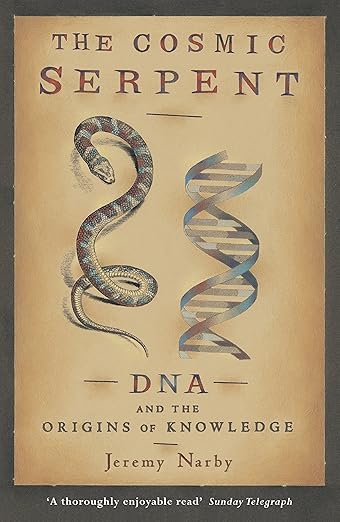
The Cosmic Serpent: DNA and the Origins of Knowledge
By Jeremy Narby. A fascinating exploration of how indigenous myths (especially serpent imagery) may align with molecular biology—DNA, knowledge, and consciousness. Perfect for bridging myth & molecule.
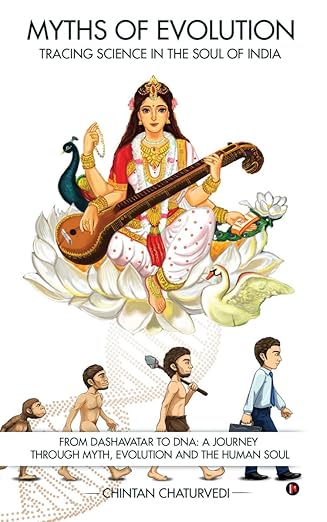
Myths of Evolution: Tracing Science in the Soul of India
By Chintan Chaturvedi. Looks at Indian mythic archetypes (avatars, serpents, cosmic waters) and links them to modern science (evolution, DNA).

By Jonathan Wells. Challenges the idea that most DNA is “junk,” examining patterns, repetition, mystery.
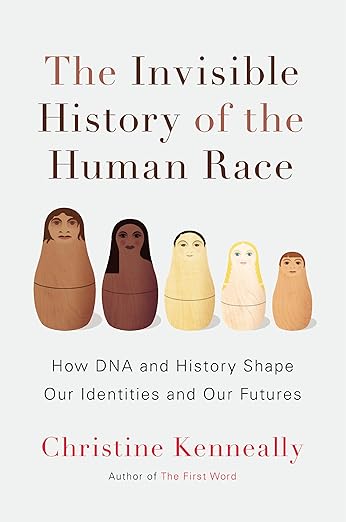
The Invisible History of the Human Race
By Christine Kenneally. Explores how genetics uncovers human history and identity. Offers a broad perspective on how patterns in DNA echo cultural and mythic patterns of ancestry and migration.
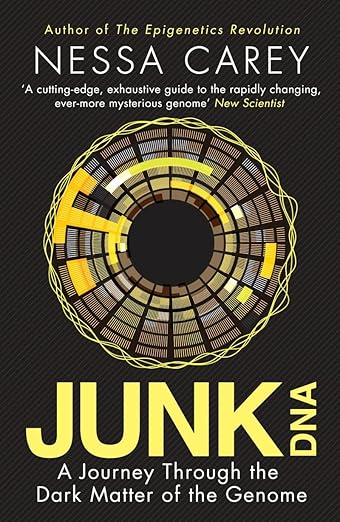
A clear, accessible exploration of the 97% of DNA once dismissed as “junk.” Carey breaks down the mysteries of non-coding sequences, repeating patterns, and hidden architecture.
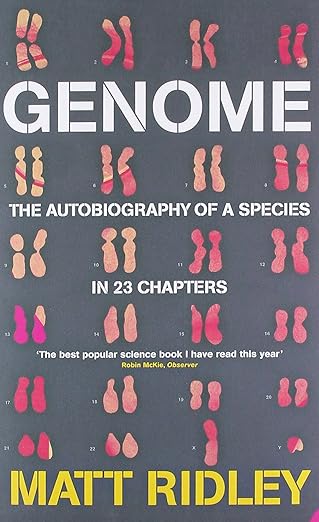
Genome: The Autobiography of a Species in 23 Chapters — Matt Ridley
Each chapter explores one chromosome and the story it tells—from evolution and disease to personality and ancestry. Written like a narrative, not a textbook.
DNA: The Secret of Life — James D. Watson & Andrew Berry
A definitive, accessible book on the history and science of DNA, revised with modern discoveries.
The Secret in Our Genes: Out of Africa and Into the World — Ebenezar Wikina
Explores human migration and how DNA records stories of our past across continents and cultures.
Explores how memory, trauma, intuition, and intelligence may also live in the body’s cells.
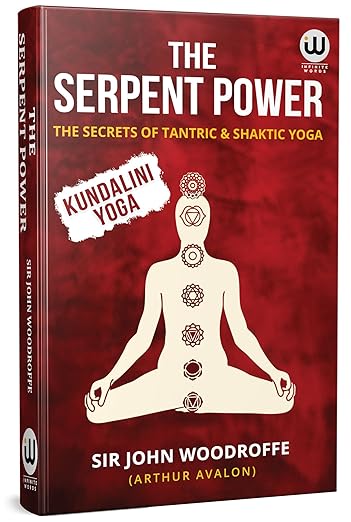
The Serpent Power — Arthur Avalon (Sir John Woodroffe)
A classic exploration of kundalini, chakras, serpent symbolism, and transformation in Tantric tradition.
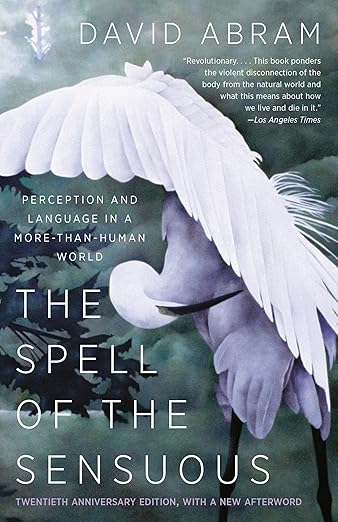
The Spell of the Sensuous — David Abram
A poetic, anthropological look at how indigenous cultures perceive the more-than-human world through symbols, patterns, and senses.
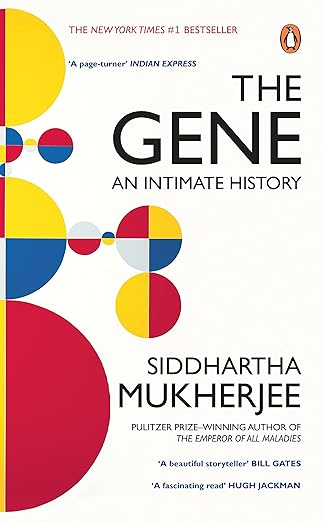
The Gene: An Intimate History — Siddhartha Mukherjee
A masterfully written history of genetics, tying together science, humanity, ethics, and identity.
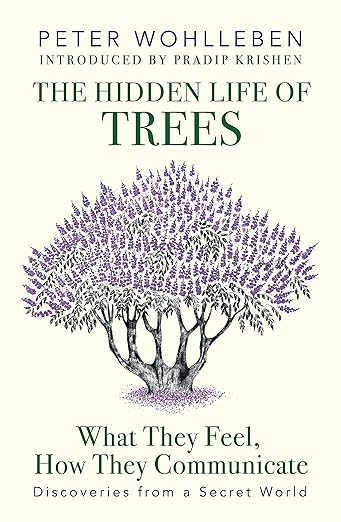
The Hidden Life of Trees — Peter Wohlleben
Not about DNA directly, but reveals hidden communication, patterning, and intelligence in nature.

No responses yet