
The Soil Remembers
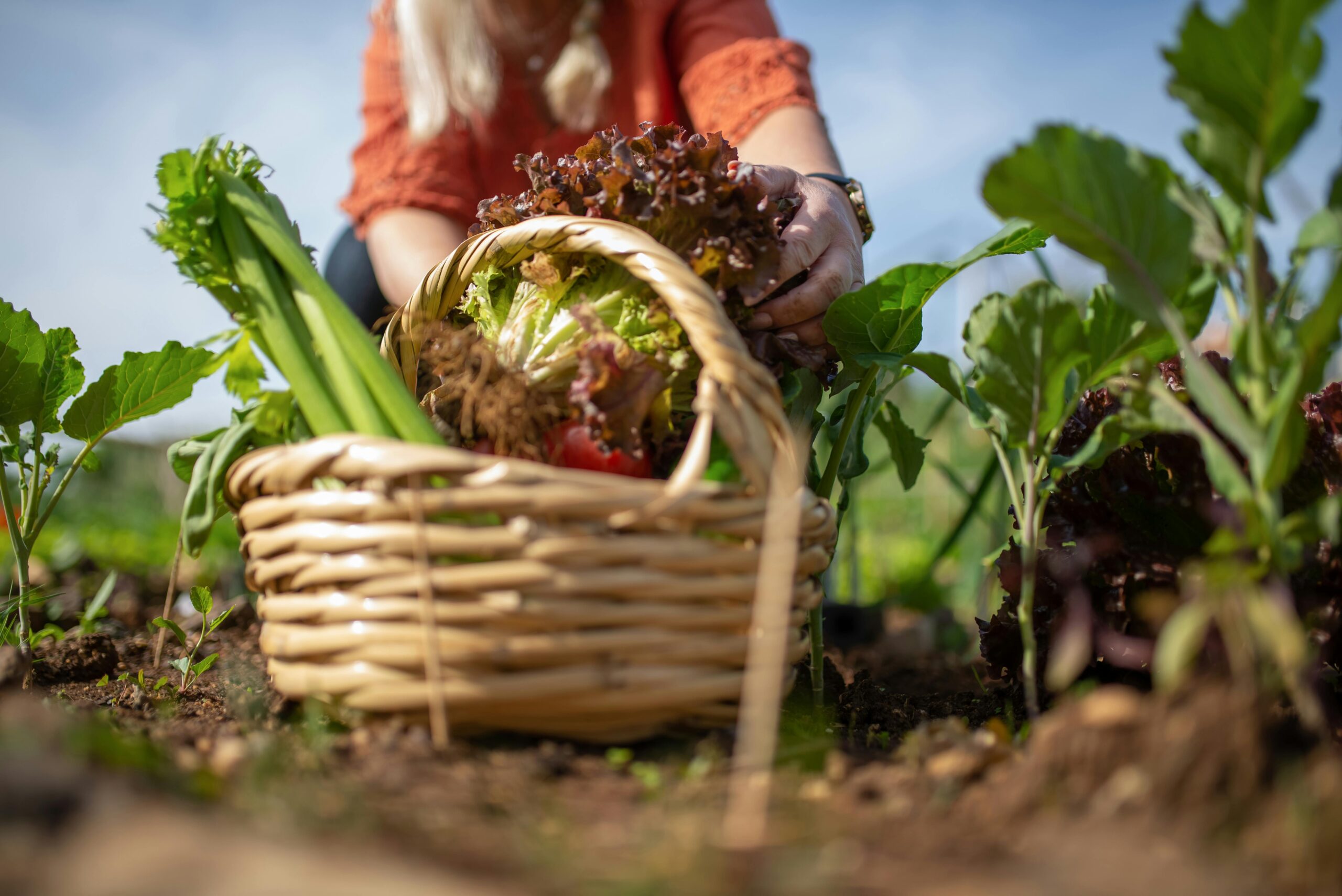
Bend down. Scoop up a handful of soil. Hold it close. Does it crumble, alive with earthworms and the faint musk of life? Or does it blow away in dust, a tired, dead powder?
That one gesture — holding soil in your palm — tells the story of humanity’s survival. Ancient India knew this truth. Surapala, in his Vrikshayurveda nearly a thousand years ago, wrote that the strength of a tree depends on the life of its roots, and the life of its roots depends on the humus of the soil. Today, soil scientists echo the same: soil organic matter is the currency of fertility.
And yet, in just fifty years of chemical-intensive farming, we’ve managed to burn much of it away. The FAO warns we may have less than 60 harvests left if soil degradation continues unchecked.
The irony? Our ancestors already gave us a blueprint to avoid this. And that blueprint — Vriksha Ayurveda — is rising again, not as nostalgia, but as survival strategy.
Ancient Practices, Modern Names
It’s almost comical how modern science keeps “discovering” what Vriksha Ayurveda quietly recorded centuries ago.
- Seed priming: Surapala advised soaking seeds in honey, ghee, cow dung, or herbal juices to “wake them up.” Today, scientists call it biopriming and publish papers in Scientia Horticulturae proving that primed seeds germinate faster, resist disease, and grow stronger.
- Pest management: Neem paste, cow urine, garlic decoctions. Farmers once made these with what was in their kitchens. Today neem oil is registered as a certified biopesticide in the U.S. and Europe (EPA.gov).
- Sacred timing: Ancient farmers sowed with the moon, planting during waxing phases for leafy growth, waning phases for root crops. In Europe, biodynamic agriculture — followed by some of the world’s top vineyards — does the same. Critics mocked it until blind tastings showed biodynamic wines outperformed conventionally grown ones.
Different words, same wisdom.
Where Ancient Wisdom is Alive Today
Let’s step into a few fields, across continents, and see how these echoes play out.
1. Sikkim, India: The Organic State
In 2016, Sikkim made a radical declaration: the state would ban all synthetic fertilizers and pesticides. Skeptics scoffed — how would farmers survive? Would yields collapse? Would people starve?
The numbers tell another story. Within a few years, Sikkim converted over 75,000 hectares of farmland, helping more than 66,000 families shift to organic methods.
Farmers returned to composting at scale, re-adopted cow-based tonics like jeevamrutham and herbal decoctions, and reclaimed old wisdom embedded in texts. Terraces, long slumping under chemical stress, revived. Pollinators returned. Streams that had carried runoff restored clarity.
Economically, the gamble paid off. Organic produce earns premium prices, and demand grew from urban markets and conscious consumers. Tourists now come not just for Himalayan vistas, but for soil that smells alive, carrots that taste like carrots, and rice grains that still hold aroma.
If Surapala saw that, he’d smile. “Yes,” he’d say, “that’s the point.”
2. Kuttanad, Kerala: The Rice that Came Back to Life
In Kerala’s Kuttanad — “the rice bowl of India” — farmers once drowned their fields in chemicals. Yields dropped, fish vanished, and even birds stopped visiting.
A group of farmers turned back to natural farming. They revived an old tonic: cow dung, jaggery, pulses, and urine — jeevamrutham again. Within three years, something miraculous happened:
- Fish reappeared in the canals.
- Frogs croaked again at night.
- Rice regained its fragrance.
One farmer told researchers: “We didn’t just bring back rice. We brought back life.”
3. Nepal: Hills of Resilience
In Nepal’s hills, some farmers are turning to biodynamics—an approach that blends age-old wisdom with mindful farming.
Soil is treated as alive, nourished with compost prepared from herbs and minerals. Seeds are sown in tune with lunar cycles, and water mixtures are stirred in careful rhythms before reaching the fields.
The result? Healthier soils, resilient crops, and produce rich in flavor. Beyond the harvest, it strengthens communities—farmers share knowledge, families eat from their land, and markets thrive.
It’s not just farming; it’s living in rhythm with the earth.
4. Ethiopia: Regreening The Highlands
In Ethiopia, decades of overgrazing and deforestation turned fields to desert. The turnaround began not with foreign aid but with local farmers who returned to terracing hillsides, composting, and planting native trees.
Within 10 years:
- Groundwater levels rose.
- Streams flowed again.
- Yields doubled.
Researchers called it “farmer-led regeneration.” Surapala might have said: “feed the roots, and the roots will feed you.”
5. France: Vineyards under the Moon
Step into Burgundy or Alsace today, and you’ll see winemakers spraying herbal teas on grapevines and timing harvests with lunar cycles. These are the same principles Surapala wrote about. The result? Wines with deeper flavor, healthier soils, and global acclaim.
When skeptics scoffed, blind tastings proved the difference. Science caught up with what ritual farmers knew: timing matters.
6. California: Soil Whisperers
In the U.S., regenerative farmers like Gabe Brown revived barren land using cover crops, compost, and livestock. Within a decade, his soil organic matter leapt from 1% to over 6%. His water retention improved so much that his farm thrived during droughts while neighbors’ wilted.
His mantra? “The soil is alive. If you feed it, it will feed you.” Replace “soil” with prithvi (Earth), and it could have come from Vriksha Ayurveda itself.
7. India: Vandana Shiva and the Seeds of Change
Vandana Shiva, the eco-activist and founder of Navdanya, has spent decades showing that India’s traditional farming wisdom is not just cultural heritage — it’s a lifeline for the planet.
One striking story comes from the farmers of Uttarakhand. In the 1990s, chemical-intensive farming and hybrid seeds had started to erode soil fertility and biodiversity. Local rice and wheat varieties were disappearing, and small farmers were losing their livelihoods. Shiva and her team began seed-saving initiatives, collecting traditional varieties and distributing them to communities. They taught farmers how to make organic compost, use jeevamrutham-like herbal tonics, and interplant crops for resilience.
Within a few years:
- The fertility of the soil rebounded.
- Water retention improved.
- Local biodiversity returned — not just crops, but birds, insects, and pollinators.
- Farmers regained control over their seeds and harvests, reducing dependence on multinational seed corporations.
As one farmer said, “We didn’t just get our seeds back — we got our lives back.”
Shiva’s work is a living demonstration of Vriksha Ayurveda principles: caring for the soil, the plant, and the community as one inseparable system. Her efforts link ancient knowledge to modern ecological activism, showing that survival and sustainability go hand in hand.
Why This Wisdom Matters Now
This is not about nostalgia or romanticism. It’s biology.
Industrial farming treated soil like an empty container — pour in chemicals, extract crops. But soil is not inert. It’s a living organism, a web of fungi, bacteria, roots, insects, and water. When we poison it, we poison ourselves.
The revival of Vriksha Ayurveda is not just cultural pride. It’s survival. Because:
- Healthy soils store more carbon, slowing climate change.
- Diverse farms resist pests without chemicals.
- Organic matter retains water, protecting against drought.
- Sacred planting rhythms foster mindfulness, rooting farmers in cycles of care.
The “ancient” is becoming the “urgent.”
The Tree as Teacher
When you water a plant on your balcony, pause. Whisper a small prayer. It may seem silly — but that’s the bridge Vriksha Ayurveda built: science carried by ritual.
Surapala, Charaka, Kautilya, and countless unnamed farmers didn’t separate “spiritual” from “practical.” For them, caring for plants was both survival and offering. A mango tree gave fruit, shade, timber, oxygen. To plant one was merit. To cut one carelessly was sin.
Our modern task is to relearn this reverence — not as blind ritual, but as recognition of dependence.
Because here’s the truth: if we treat soil, water, and trees as commodities, they will leave us. If we treat them as kin, they will carry us forward.
Further Reading
If this series on Vriksha Ayurveda has sparked your curiosity, there’s a wealth of knowledge waiting to be explored. From ancient texts to modern interpretations, these books dive deeper into regenerative farming, biodynamics, and the ways humans can work with nature — not against it.
Whether you’re a farmer, gardener, or simply a lover of the natural world, these reads offer practical guidance, inspiring stories, and insights to bring the wisdom of the past into today’s fields and homes.
- From the Ground Up: The Women Revolutionizing Regenerative Agriculture by Stephanie Anderson
A recent book (2024) highlighting how women farmers, entrepreneurs, and activists are driving the regenerative agriculture movement. Inspiring stories and practical models — great for understanding how ancient techniques are being revived in modern contexts. - Principles of Organic Farming by S.R. Reddy
A solid primer on organic farming methods — soil management, pest control, crop rotation. More technical, more Indian-contextual. Good for readers wanting grounded methods. - Principles of Organic Farming by S.S. Walia & R.K. Nanwal
Another Indian text, covers organic farming from policy to practice. Good for those who want a more academic/structured background. - Regenerative Agriculture: Translating Science to Action (Edited volume, 2024)
It explores how science (soil science, ecology, etc.) is being applied in regenerative farming, with case studies and research. Good for someone who wants the “why and how” side. - One-Straw Revolution: Introduction to Natural Farming by Masanobu Fukuoka
A classic. Philosophy + practice. Fukuoka’s ideas (no tilling, trusting soil, minimal inputs) align closely with what Vriksha Ayurveda teaches. For anyone wanting the spirit and the practical. - Stolen Harvest: The Hijacking of the Global Food Supply: The Highjacking of the Global Food Supply (Culture of the Land) by Vandana Shiva
Vandana Shiva’s critique of industrial agriculture. It situates the conversation: why we moved away from these practices, and what’s at stake in reclaiming them. - Quality Agriculture by John Kempf
A dialogue-style book with multiple voices (farmers, scientists). Good for readers who like hearing multiple perspectives rather than a single doctrine. - The Basics of Regenerative Agriculture: Chemical-Free, Nature-Friendly and Community-Focused Food (Ross Mars & Stuart B Hill)
A beginner’s guide: concepts and practices in regenerative agriculture, approachable for newcomers. - The Power of Regenerative Agriculture by Michael Barton
Broad, inspiring, covering ecosystem, social, and economic dimensions of regeneration. - A Practical Whole Systems Guide to Making Small Farms Work (Richard Perkins)
Very much in alignment with Vriksha Ayurveda — holistic systems approach. - Regenerative Agriculture for Sustainable Food Systems
Combines soil, cropping, climate resilience — good bridge between practice and theory. - The Regenerative Agriculture Solution: A Revolutionary Approach by Ronnie Cummins (Author), Andr Leu (Author), Vandana Shiva (Foreword)
Focuses on large ecosystems — regrowth, climate impact, systems beyond farms. - Staying Alive: Women, Ecology, and Development by Vandana Shiva
This seminal work examines the intersection of women’s roles in ecology and development, highlighting how women’s traditional knowledge contributes to sustainable agricultural practices and environmental stewardship. Shiva critiques the dominant development paradigms and advocates for a more inclusive approach that values ecological balance. - The Violence of the Green Revolution: Third World Agriculture, Ecology and Politics by Vandana Shiva
Shiva critically analyzes the Green Revolution’s impact on agriculture, particularly in India, discussing how the introduction of high-yielding varieties and chemical inputs led to the erosion of biodiversity, soil fertility, and the marginalization of traditional farming communities. - Earth Democracy by Vandana Shiva
Shiva presents a vision of ‘Earth Democracy’ that challenges the prevailing economic and political systems, advocating for a paradigm that respects ecological limits, promotes social justice, and fosters peace. She discusses the interconnectedness of environmental health and human well-being. - The Nature of Nature: The Metabolic Disorder of Climate Change by Vandana Shiva
Shiva delves into the ecological disruptions caused by climate change, discussing how human activities have disturbed the natural metabolic processes of the Earth. She calls for a return to ecological harmony through sustainable practices.
Resources
- Singh et al. (2017). “Seed Priming: A Potential Tool in Agricultural Practices.” Scientia Horticulturae.
- EPA on Neem Oil
- Navdanya.org — Vandana Shiva’s seed-saving and agroecology movement.
- FAO on soil degradation
- Charles Massy, Call of the Reed Warbler (2018).
- Vandana Shiva, Staying Alive (1989).
- Jules Pretty, Regenerating Agriculture (1995).
- Chris Reij et al., “Farmer Managed Natural Regeneration in Niger and Ethiopia.” World Resources Institute.

No responses yet