
Children of the Soil
Soil — it’s a living, breathing web of organisms, chemistry and energy. When soil is healthy, everything above it thrives. When it’s sick, entire communities weaken. Below are the details — the science, the history, and the real-world reversals that show how fast soil can both fail and heal.
“To forget how to dig the earth and to tend the soil is to forget ourselves.”
Mahatma Gandhi
Soil is a living universe
A single gram of healthy soil is astonishingly alive: it can contain a billion bacterial cells and miles of fungal filaments. Those microbes — bacteria, fungi, protozoa, nematodes, arthropods — form the biochemical engine that converts dead matter into nutrients plants can use. The fungal networks (mycorrhizae) join roots together into what some ecologists call the “wood-wide web,” a communication and nutrient-sharing system between plants. (UC Davis)
Why care? Because soil life determines water retention, nutrient cycling, disease suppression and carbon storage — everything that makes a farm resilient or fragile.
Food is a mirror of soil
Careful analyses across decades show a real decline in many minerals and micronutrients in common fruits and vegetables. Recent literature reviews and meta-analyses confirm what farmers have observed for years: nutrient density has dropped, and the causes are twofold — breeding for yield and the decline of soil health.
- Modern meta-reviews show significant drops in minerals (calcium, iron, magnesium, etc.) in many crops compared with mid-20th-century levels; the problem is getting more urgent as rising CO₂ also dilutes nutrient concentration in some crops. (PMC)

Appearance of nitrogen and micronutrient deficiencies in cultivable land in India.
- Earlier, Davis et al. assembled evidence that higher yields often trade off with mineral concentration — an inverse relationship between yield and nutrient density. (ResearchGate)
How modern farming stripped the living soil
The Green Revolution and post-war intensification massively raised yields, but often by short-circuited routes: applying mineral fertilizers to push production while bypassing the living processes that create fertility. The consequences include:
- Loss of soil organic matter and microbial diversity.
- Soil structure breakdown (compaction, reduced porosity).
- Increased erosion, salinization in irrigated lands, and chemical pollution of water.
These are not abstract: the UN and FAO estimate nearly one-third of the world’s soils are already moderately or highly degraded, a trend that threatens food security and resilience. (FAOHome)
History warns — civilisations and soil collapse
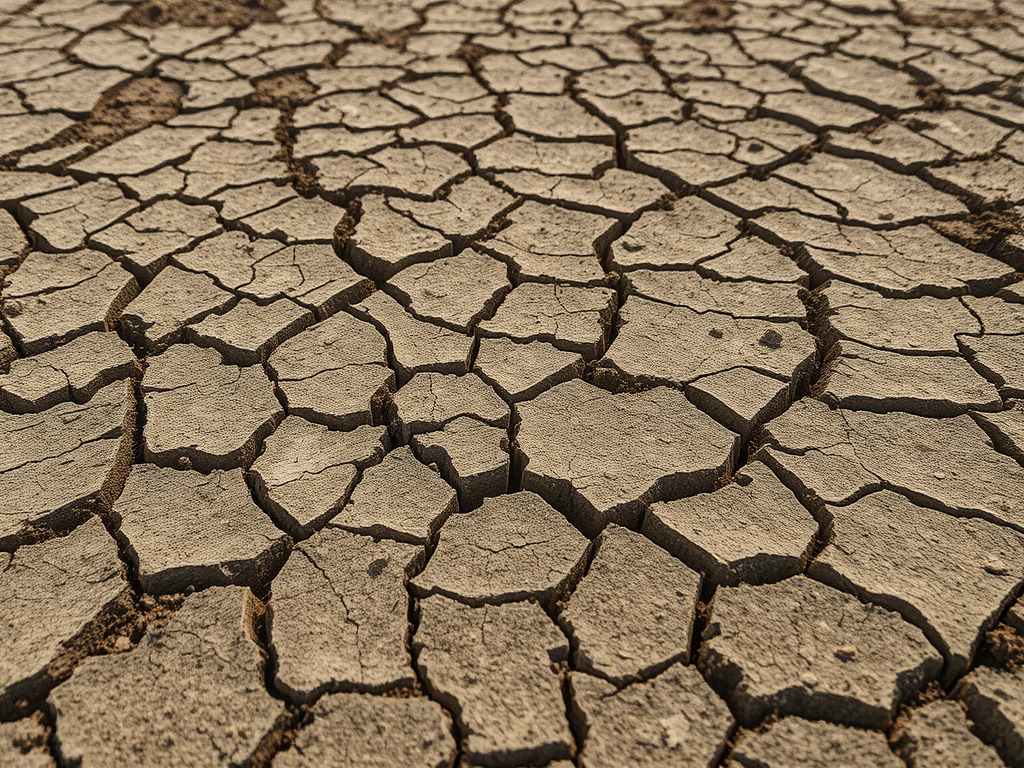
This isn’t a modern cautionary tale alone — history shows the stakes.
- Mesopotamia: archaeological and agronomic studies point to progressive salinization of irrigated soils as a major factor weakening ancient southern Mesopotamian agriculture and political stability over centuries. Ancient irrigation with poor drainage allowed salts to concentrate in the root zone, reducing yields and contributing to societal stress. (SpringerLink)
- The Dust Bowl (1930s, USA): decades of intensive plowing and removing native grasses left prairies vulnerable. When drought hit, topsoil blew away, crops failed, people migrated and economic collapse followed — an unmistakable lesson that topsoil is not infinite. (National Drought Mitigation Center)
- Maya Civilization (Central America):
The flourishing Maya cities of Mesoamerica were sustained by advanced agriculture, but evidence shows that centuries of deforestation, slash-and-burn farming, and soil erosion weakened the land. Combined with prolonged droughts, these practices reduced yields and stressed urban populations. Archaeological soil-core studies reveal layers of eroded sediment, pointing to overuse of fragile tropical soils as a factor in the decline of the Maya. (PNAS) - Easter Island (Rapa Nui, Pacific):
The famous statues of Rapa Nui were carved by a once-thriving society. But intensive agriculture, combined with deforestation for fuel and statue transport, stripped the island’s thin volcanic soils of fertility. Without trees, erosion worsened, crop yields declined, and food scarcity fueled societal collapse. Soil analyses show nutrient depletion and erosion scars that mirror the island’s cultural unraveling. (science)
History’s message is blunt: when you destroy soil, you threaten the social fabric.
But soil heals — scalable, low-tech wins
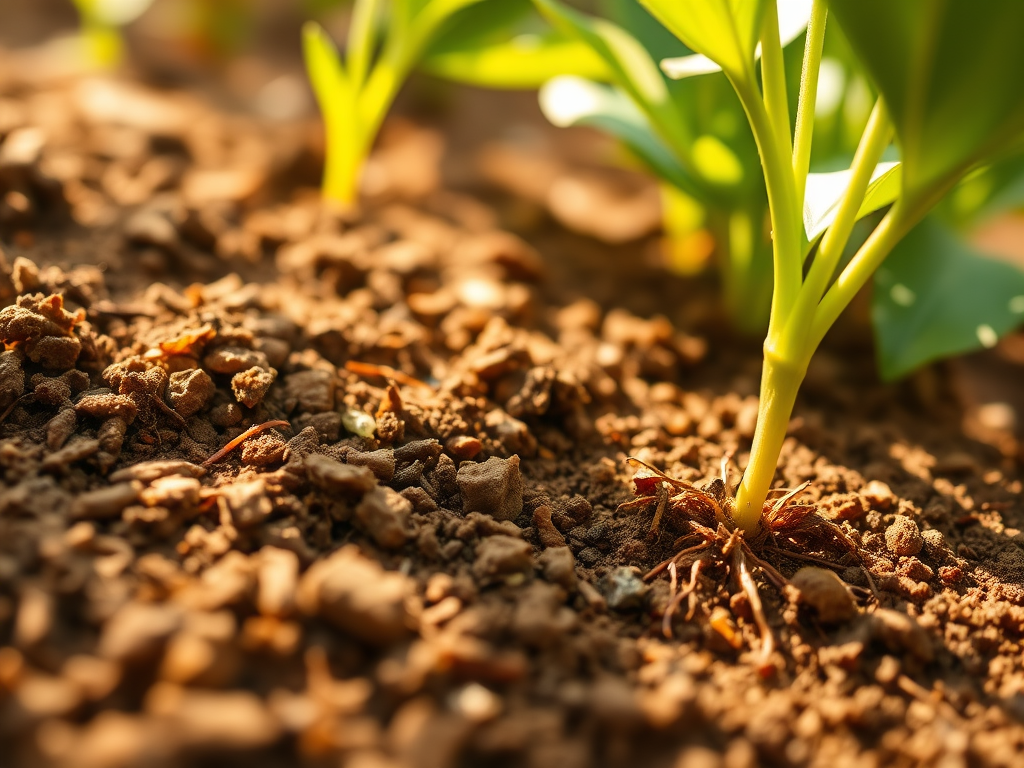
The good news is dramatic: soil can recover, and communities worldwide have proven it with low-tech, locally appropriate methods.
- Zai pits (Burkina Faso) — small planting pits filled with compost and stones that concentrate water and nutrients. These have helped rehabilitate hundreds of thousands of hectares and dramatically improved local food production and income for farmers. (ResearchGate)
- FMNR — Farmer-Managed Natural Regeneration (Niger & Sahel) — by protecting and pruning native tree regrowth rather than cutting, communities regenerated millions of hectares of formerly barren land (over 3 million hectares in Niger alone by some estimates), restoring tree cover, improving soil and creating microclimates that revive crops. This approach is cheap, locally led, and hugely scalable. (Nature)
- Zero-Budget Natural Farming (Andhra Pradesh, India) — community movements and government programs that focus on on-farm compost, biocontrols and biodiversity have shown promising results in restoring fertility while lowering farmers’ costs; governments are investing in scaling these approaches at state level. (Desagri)
These examples share a theme: rebuild organic matter, stop destroying microbial life, and work with local ecologies rather than overriding them.
Regenerative agriculture: evidence that resilience pays
Long-term trials and comparative studies are shifting the debate from ideology to data:
- The Rodale Institute’s Farming Systems Trial (40+ years) shows that regenerative organic systems build soil organic matter, reduce runoff and — crucially — perform better than conventional systems under extreme weather (e.g., during drought years organic/regenerative systems yielded more). This is not just theory: healthy soil buffers weather extremes. (Rodale Institute)
Together with FMNR and local restoration techniques, long-term trials give a practical roadmap: invest in biology and the land rewards you with resilience.
Soil and climate: a two-way relationship
Healthy soil doesn’t just grow food — it helps fight climate change.
The “4 per 1000” initiative shows that even a small yearly increase in soil carbon worldwide could lock away huge amounts of CO₂. While it’s not the only solution, it’s a powerful one. (4P1000)
Carbon-rich soil is also more fertile and holds more water, making crops stronger against both droughts and floods. In fact, experts say that for every 1% increase in soil organic matter, soil can store much more water — a natural shield for farmers during dry spells. (NRDC)
Soil and human health — the chain is direct
When soils lose minerals and microbes, it shows up on plates and bodies. Recent reviews link declines in nutrient density to soil depletion and modern agricultural choices; public-health agencies estimate billions worldwide face micronutrient shortfalls that are partially rooted in soil and food-system changes. The consequence is not abstract: weakened immune systems, poorer cognitive development, and higher vulnerability to disease. (PMC)

There’s also an emerging line of research into how soil microbes interact with human health through exposure (the “old friends” hypothesis) and through the food chain — a reminder that healthy soil is part of a healthy gut, community, and culture.
Practical tools that restore soil
If you want the quick toolkit — here’s what the successful projects share, and what can be scaled from garden to landscape:
- Add organic matter (compost, manure, leaf litter) — feeds microbes and builds structure.
- Cover crops and crop rotations — protect soil, add nitrogen, interrupt pests and build diversity.
- No-till or reduced tillage — preserves fungal networks and aggregates.
- Agroforestry and trees on farms — stabilize water, shade, and biodiversity; classic example: shade coffee restoring coffee landscapes. (merakiimpact.com)
- Water-harvesting techniques (zai, contour bunds) — keep water where it falls, recharge soils and wells. (ResearchGate)
- Protect and regenerate native trees (FMNR) — cheap, rapid restoration that returns nutrients and shade. (Nature)
- Long-term planning — soil rebuilds on a timescale of years, not weeks; but practical gains (better yields, resilience) are visible within a few seasons in many projects. (Rodale Institute)
These are not utopian ideas — they’re field-tested practices used by millions of farmers.
Let’s stop speaking only in numbers and solutions. Here are the human truths the soil is showing us:
- Soil transforms death into life, waste into nutrition, rain into harvest.
- What we take from soil we must pay back; otherwise the system fails, and all life will suffer.
Key sources & further reading :
FAO on global soil degradation. (FAOHome)
Bhardwaj et al., 2024 — evidence of nutrient decline in foods. (PMC)
UC Davis / soil microbiology overview (microbes per gram). (UC Davis)
Farmer-Managed Natural Regeneration (FMNR) — large-scale revegetation examples. (Nature)
Rodale Institute Farming Systems Trial — long-term regenerative evidence. (Rodale Institute)
If this journey touched something deep within you, it’s just the beginning.
The Secret Life of Plants opens the doorway to this hidden world of consciousness and connection.

2 Responses
I appreciate you taking the time to explain this.
I’m really glad it helped bring some clarity. Thank you for reading — it makes sharing this worthwhile