
Pioneers of Plant Mysteries
“Look closely at a plant, and you are peering into the oldest wisdom keeper on Earth.”
Long before labs and measuring devices confirmed what mystics had whispered for centuries, a handful of pioneers began to notice that plants were not passive ornaments, but living, sensing beings.
Some were scientists with microscopes, some were poets with intuition, some were farmers with soil under their fingernails. All risked ridicule by insisting that the green world was far more alive — and far more aware — than anyone imagined.
A Hidden World Beneath the Microscope
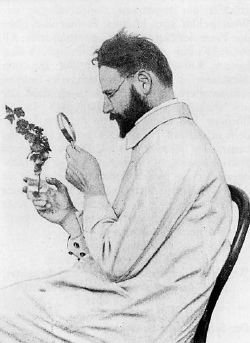
In early 20th-century Vienna, Raoul Heinrich Francé leaned over his microscope and peered into a leaf. What he saw shook him.
It wasn’t a flat green surface at all. Magnified millions of times, it was a city: fluid highways carrying nutrients, tiny valves opening and closing like breathing mouths, unseen pulses of life.
Francé declared plants to be “architects, chemists, and physicians in their own right.”
While most saw stillness, he saw strategy.
Roots maneuvering like explorers.
Leaves adjusting pores with precision.
Stems bending toward light with intention.
At a time when mainstream science dismissed plants as automatons, Francé insisted they were dynamic beings, orchestrating survival with genius. He was laughed at, called eccentric — yet today, plant neurobiology is proving him right.
👉 Fast forward a century
Modern scientists now confirm that plants have memory, send electrical signals, and even warn each other of danger — just as Francé hinted a century ago.
The Poet Who Heard Plants Breathe
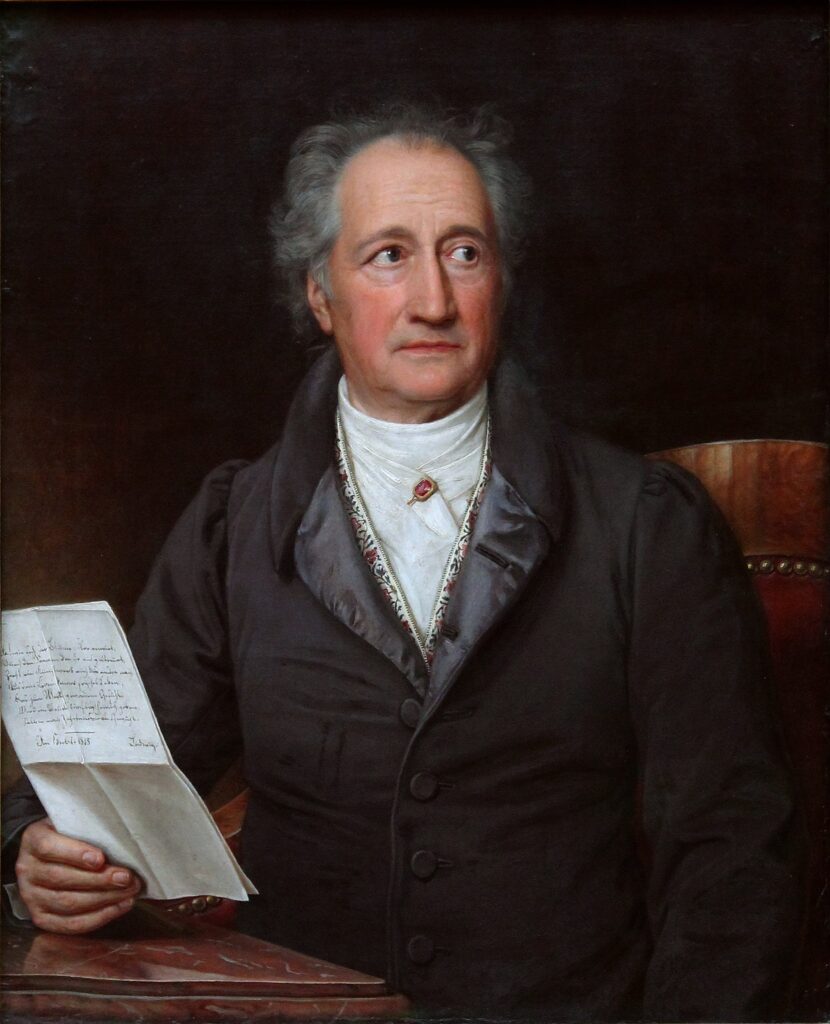
The German poet Johann Wolfgang von Goethe didn’t just admire plants; he believed they revealed cosmic truth.
He spoke of the Urpflanze, the “primal plant” that expressed itself endlessly — a leaf, a flower, a fruit, all variations of one archetype. To him, each unfolding stage was a kind of breath, a rhythm mirroring the universe itself.
He wrote in Metamorphosis of Plants:
“The plant goes through its thousand changes,
But ever remains the same.
Its inner law guides it onward,
From leaf to blossom, to fruit, to flame.”
And again, in a verse that still startles with its clarity:
“All forms are similar, and none alike;
And so the choir hints at a secret law,
A sacred, mysterious plan,
Held deep within the plant.”
Goethe urged science to move beyond dissection into participation. To notice the way plants gesture, as if silently speaking the language of the cosmos.
“The plant is a silent, living gesture of the universe,” he wrote.
He was mocked by rationalists of his age, dismissed as a dreamer. But his ideas foreshadowed modern systems biology — seeing the whole, not just the parts.
👉 What Goethe taught us
Studying a plant with only instruments is like reading poetry without emotion — you’d miss the meaning entirely.
Do Plants Respond to Love?
Here’s a thought experiment:
Put two plants in your room. To one, offer encouragement, love, even music. To the other, neglect or insult it.
Generations of experiments — some scientific, some school projects, some viral social media trends — have shown the same thing: plants know when they are cherished. They lean toward kindness, thrive on care, and falter under neglect.
Could it be that growth itself is a relationship? That a plant’s roots not only search for water but also for connection?
👉 Did you know?
Plants can even distinguish between the sound of a running tap and real rain — bending their roots differently depending on what they “hear.”
The Wizard of Tuskegee
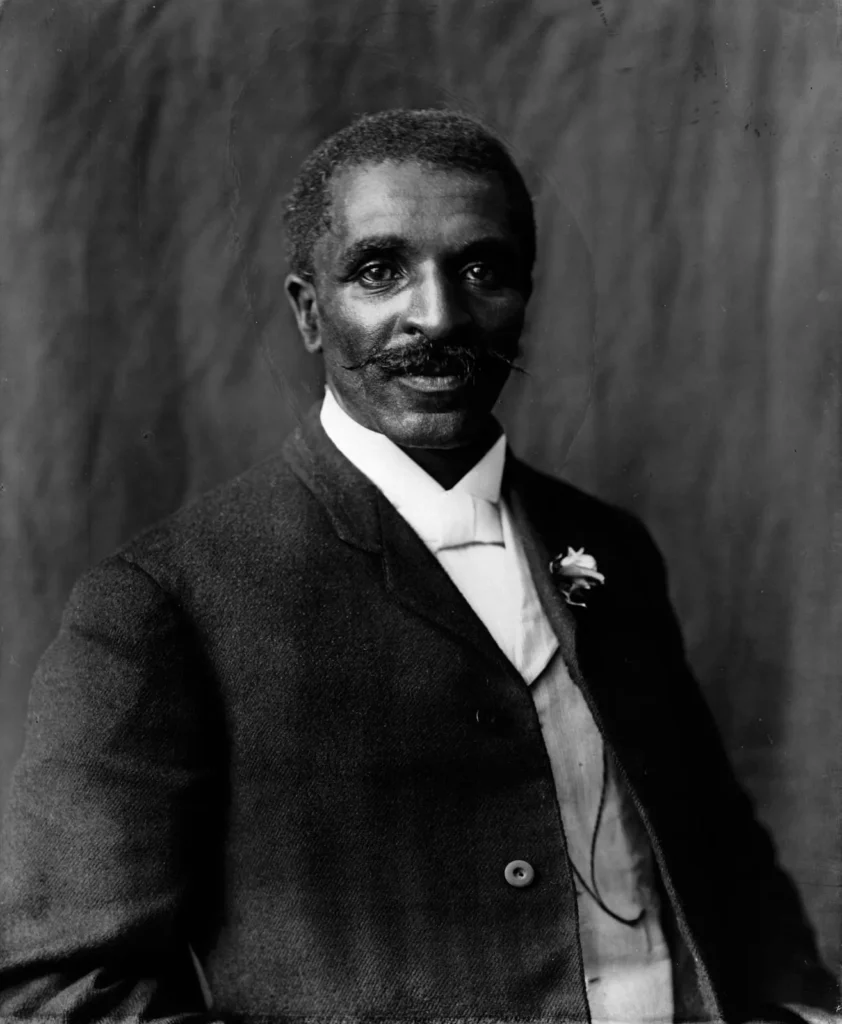
If anyone embodied this truth, it was George Washington Carver.
Born into slavery in Missouri, sickly and frail, Carver found solace in nature. As a child, he spoke to wildflowers, trees, and weeds, asking them for secrets. People laughed, but he never stopped listening.
That boy became one of the most remarkable plant scientists in history. At Tuskegee Institute, Carver revolutionized agriculture by teaching farmers to rotate crops with peanuts and sweet potatoes, restoring soils stripped bare by cotton.
From peanuts alone, he created over 300 products — flours, dyes, oils, plastics, even fuels. From sweet potatoes, another 100 uses, including synthetic rubber during wartime shortages.
Yet when journalists asked him how he made his discoveries, Carver’s answer was not chemical formulas or mechanical methods.
He said simply: “Anything will give up its secrets if you love it enough.”
Carver rose before dawn, wandering fields in silence. He prayed, he observed, and — most startlingly — he said he spoke to plants.
“They talk to me,” he explained. “God speaks to me through them. The little flower can give us the answer to everything.”
👉 Here’s something remarkable
Carver refused to patent most of his discoveries, saying that knowledge was a gift from God meant to be shared, not sold.
What the Pioneers Teach Us
Francé with his microscope.
Goethe with his poetry.
Carver with his prayers in the dawn fields.
Different tools, different paths — but one truth:
- Plants are not background scenery.
- They are intelligent participants in the web of life.
- They respond, they guide, they reveal.
And yet, each of these pioneers was dismissed, ridiculed, or quietly forgotten in their time. Francé’s work was overshadowed, Goethe was mocked as unscientific, Carver was often celebrated for his “practical” work but ignored for his mystical insights.
Only now — as plant research catches up — do we see how right they were.
Goethe wrote: “The universe speaks to us in the language of nature.”
Francé showed plants as builders and healers, invisible yet alive with intelligence.
Goethe revealed them as cosmic symbols, breathing the rhythm of creation.
Carver lived as though plants were teachers and partners, whispering divine solutions.
Perhaps what these pioneers wanted most was for us to slow down — to look closer, listen deeper, and realize that the green world is not silent.
It is singing.
This is Part 2/5 of The Silent Intelligence of Plants, inspired by The Secret Life of Plants by Peter Tompkins and Christopher Bird.
Next: Tuned to the Music of the Spheres — where we uncover how plants resonate with sound, electricity, and even cosmic vibrations.
If this journey touched something deep within you, it’s just the beginning.
The Secret Life of Plants opens the doorway to this hidden world of consciousness and connection.

2 Responses
Thank you so much for these insights. But how on earth am going to de-weed my garden knowing this?! I feel brutal.
Haha I get you!
Don’t worry, de-weeding isn’t cruelty… it’s caretaking. In nature, everything interacts, competes, balances, and makes space for what needs to grow.
Think of it less as “killing” and more as guiding the ecosystem so your garden can thrive. Even forests shed, prune, and push for balance. You’re doing the same — just with love and awareness.