
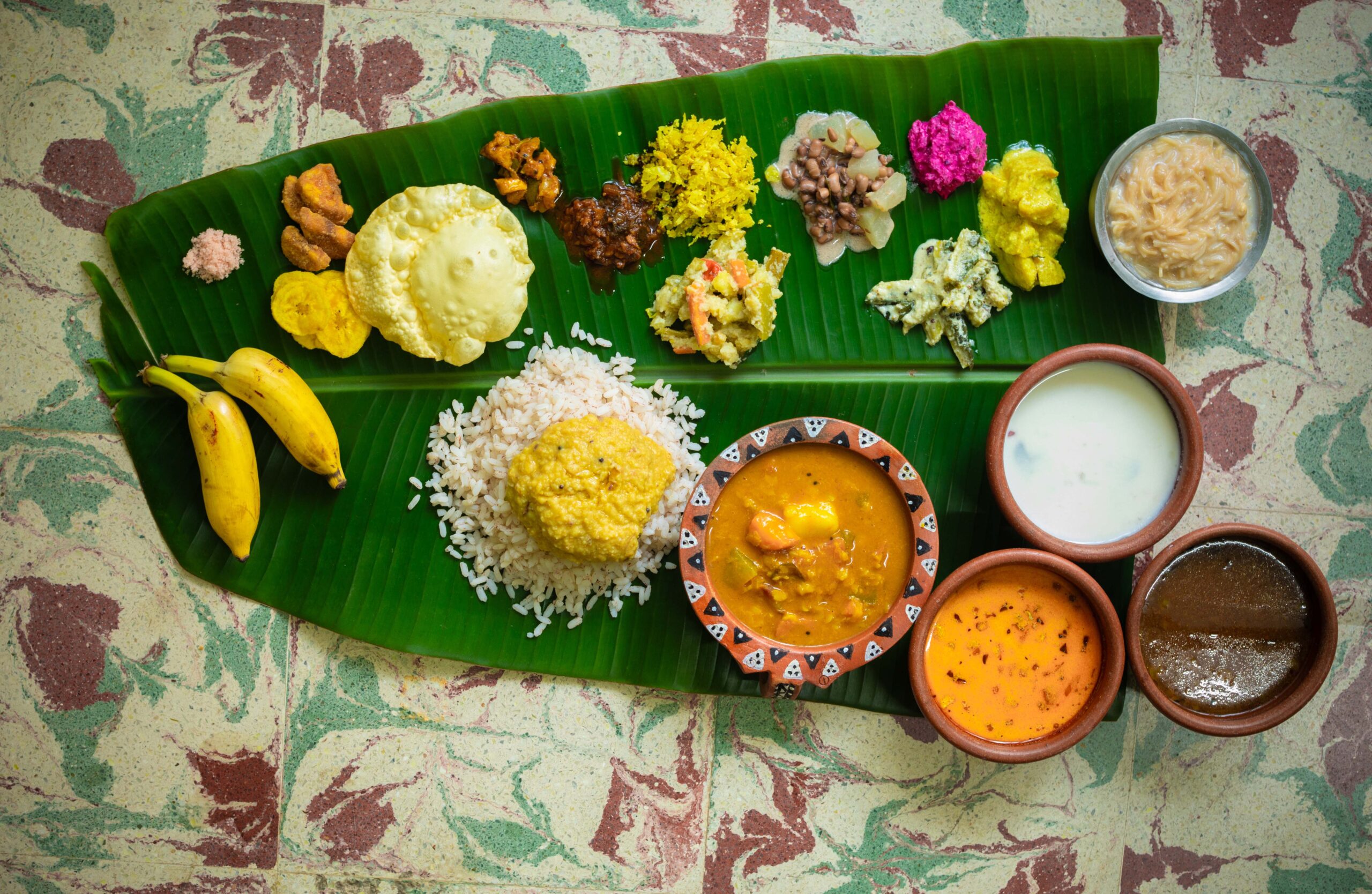
Onam, Kerala’s grand harvest festival, is more than just a celebration — it is a living tradition that binds together food, community, and nature. Rooted in the legend of King Mahabali, who ruled a land of equality and prosperity, Onam is celebrated with joy, flowers, new clothes, music, dance, and above all, the grand feast — the Onam Sadhya.
The Spirit of Sadhya
The Sadhya is not just a meal; it is an experience. Served on a fresh banana leaf, it is a colourful spread of over 20 dishes, each carrying Ayurvedic wisdom for balance and health. The Sadhya honours the body with nourishment, the senses with flavour, and the community with togetherness.
Why a Banana Leaf?
The banana leaf is more than a plate. When hot food is served, it releases natural polyphenols, powerful antioxidants that boost health. The leaf itself is antimicrobial, reducing bacterial activity and ensuring hygiene. Traditionally, the leaf is placed with its narrow tip to the left — a small but meaningful detail that shows how even the act of serving is steeped in intention.
The Posture and Practice
Sadhya is eaten sitting cross-legged on the floor, usually in Sukhasana. This posture helps direct blood flow to the stomach, aiding digestion. Food is eaten with bare hands — not just for convenience, but because Ayurveda teaches that each finger represents one of the Pancha Bhootas (five elements: earth, water, fire, air, and space). Eating with hands deepens connection with food, engages all the senses, and supports mindful eating. Facing east while dining is considered most auspicious, aligning with the flow of prana (life energy).
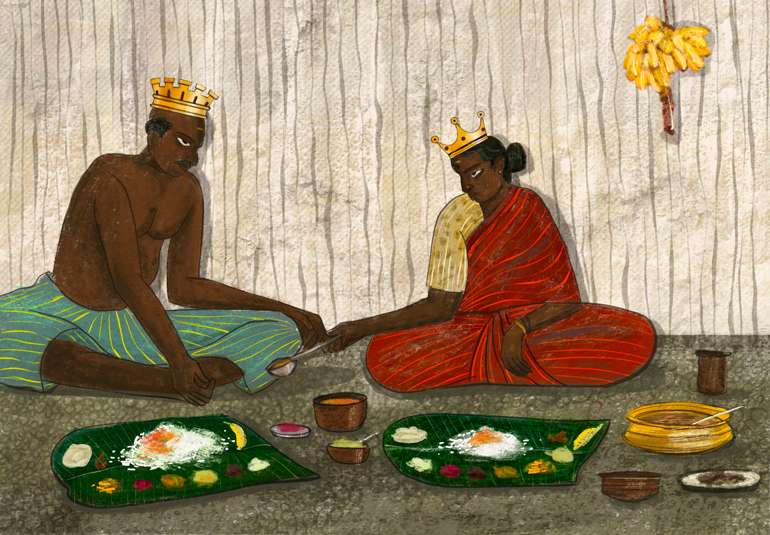
Artwork – Vaishnavi Ramesh, 2024 (https://www.oneating.in/onam-sadhya/)
Order and Balance
The brilliance of the Sadhya lies in its order. Dishes are served and eaten in a carefully designed sequence:
- Start light: parippu (lentils) with ghee and rice.
- Build heavier: sambar, rich in vegetables and spices.
- Lighten again: rasam, a thin, tangy digestive.
- Cool and soothe: moru (buttermilk curry).
- End sweet: payasam, the grand finale.
This progression moves from light → heavy → light, ensuring the stomach is never overwhelmed, and digestion flows smoothly.
Ayurvedic Wisdom on the Plate
Every dish in the Sadhya has a purpose, carefully chosen for the season and body’s needs:
- Matta Rice – rich in fibre and minerals, grounding and wholesome.
- Parippu with Ghee – enhances absorption, strengthens digestion.
- Sambar – anti-inflammatory, full of fibre and plant protein.
- Avial – a mix of vegetables balancing all six Ayurvedic tastes (Shad Rasa).
- Kaalan – a probiotic curry with yogurt and yam, immune-boosting.
- Olan – cooling ash gourd with cowpeas in coconut milk, hydrating and light.
- Thoran – a dry, sautéed vegetable dish with coconut, easy to digest.
- Rasam – a thin, spicy-sour broth that detoxifies and stimulates appetite.
- Moru / Pulissery – probiotic-rich buttermilk curry, soothing for the gut.
- Puli Inji (Ginger Curry) – fiery, sweet, and sour, excellent for preventing bloating.
- Pachadi / Kichadi – yogurt-based dishes with vegetables like beetroot or bitter gourd, cooling and balancing.
- Pickles – tangy bursts that trigger digestive enzymes.
- Pappadam – crunchy and light, adding texture to the meal.
- Banana Chips & Sharkara Varatti – quick energy, balancing sweet and savoury.
- Payasam – a sweet made with jaggery, coconut milk, or milk, pacifying both body and mind.
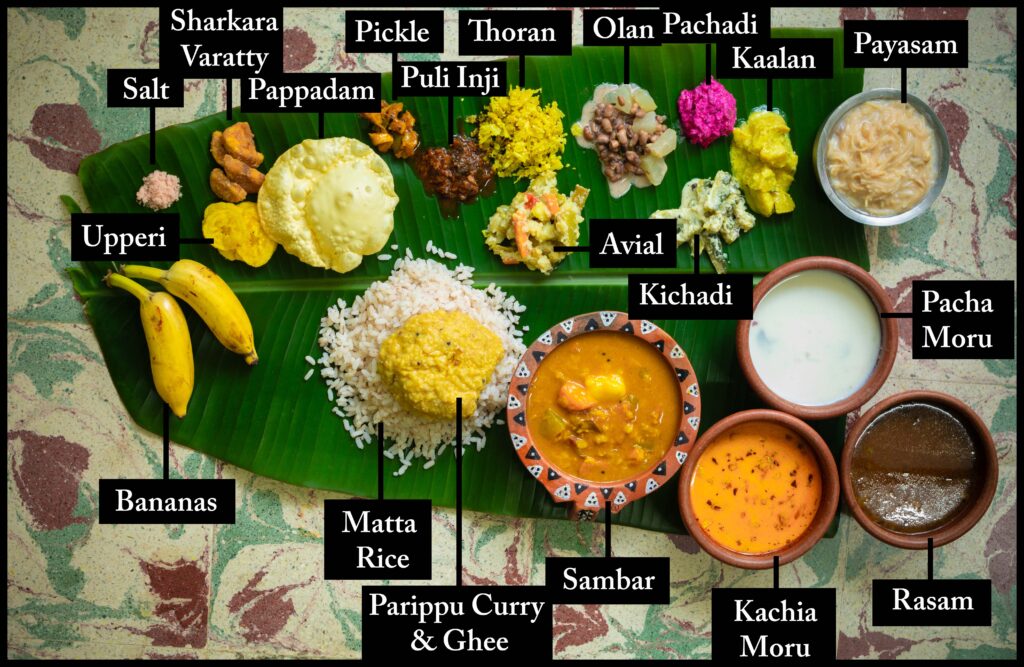
Together, these dishes form a holistic Ayurvedic meal — a harmony of tastes, textures, and medicinal values.
A Feast for the Season, Not for Every Day
While the Onam Sadhya is a magnificent display of Ayurveda and tradition, it is not meant to be an everyday meal. Ayurveda reminds us that moderation is key.
Each dish in the Sadhya has its own health benefits — from cooling pachadis to probiotic kaalan and detoxifying rasam. Yet, when eaten together in one sitting, the sheer richness of the spread can be too heavy for digestion. That is why this grand feast is celebrated just once a year, as part of the Onam harvest festival.
Traditionally, smaller portions are encouraged, so the body can enjoy the variety without strain. This balance of celebration and moderation reflects the Ayurvedic principle that even the healthiest foods must be aligned with time, season, and need.
Community and Celebration
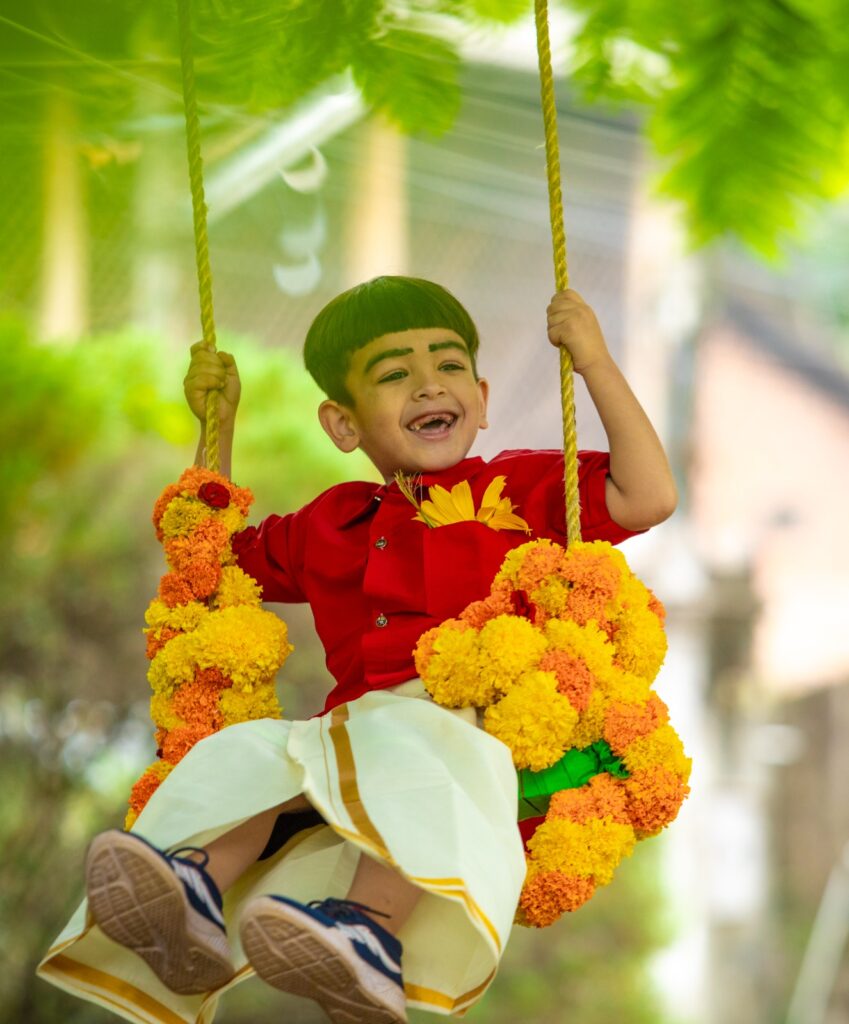
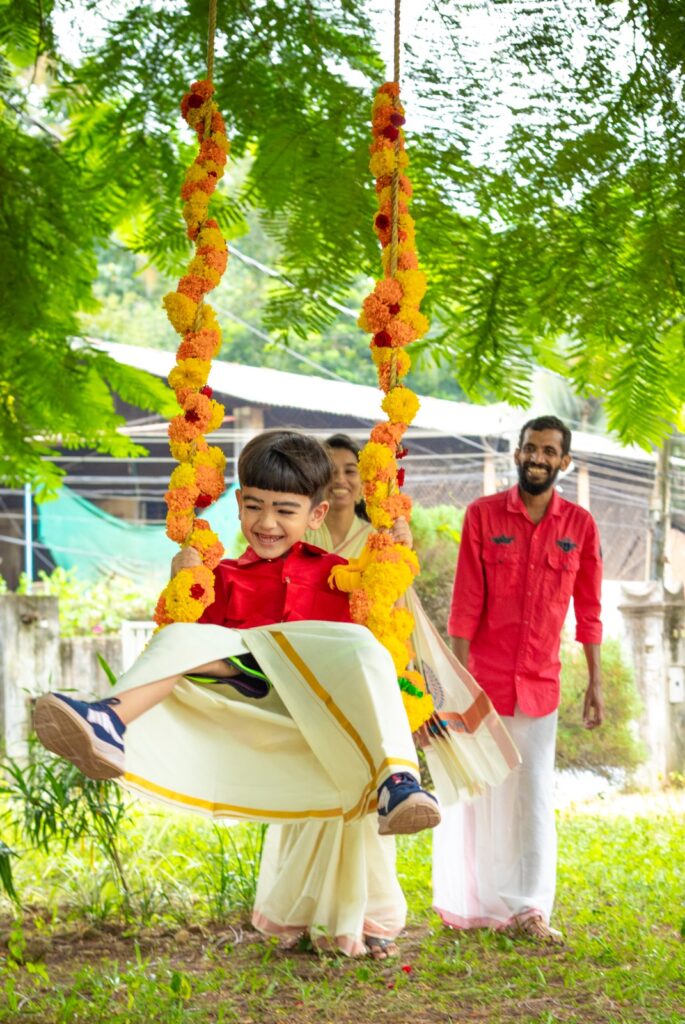
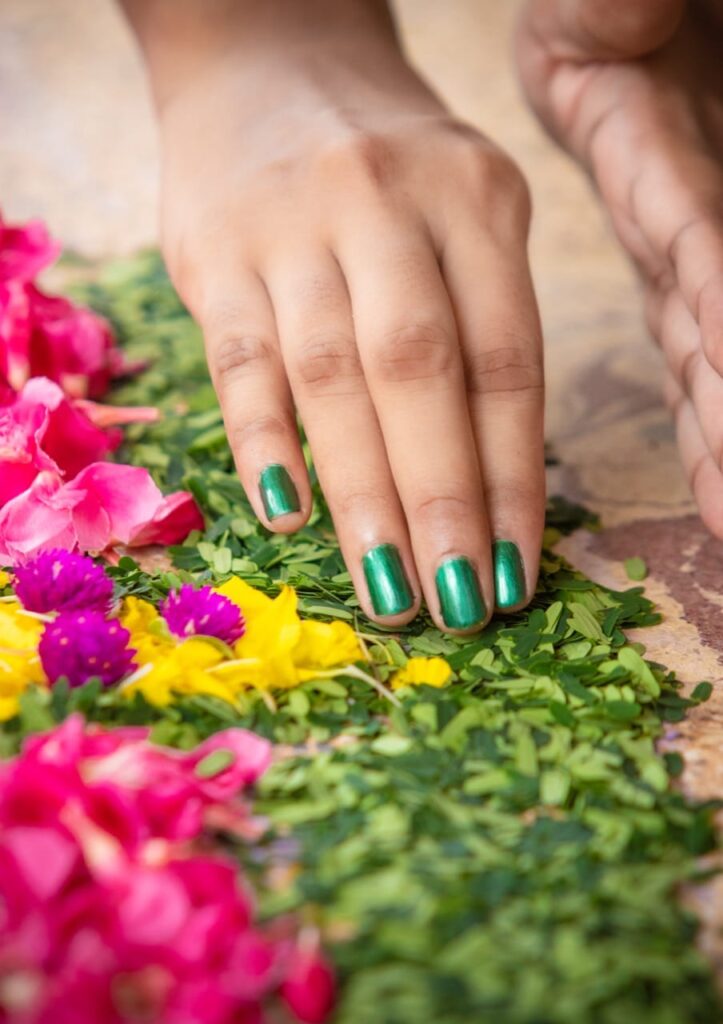
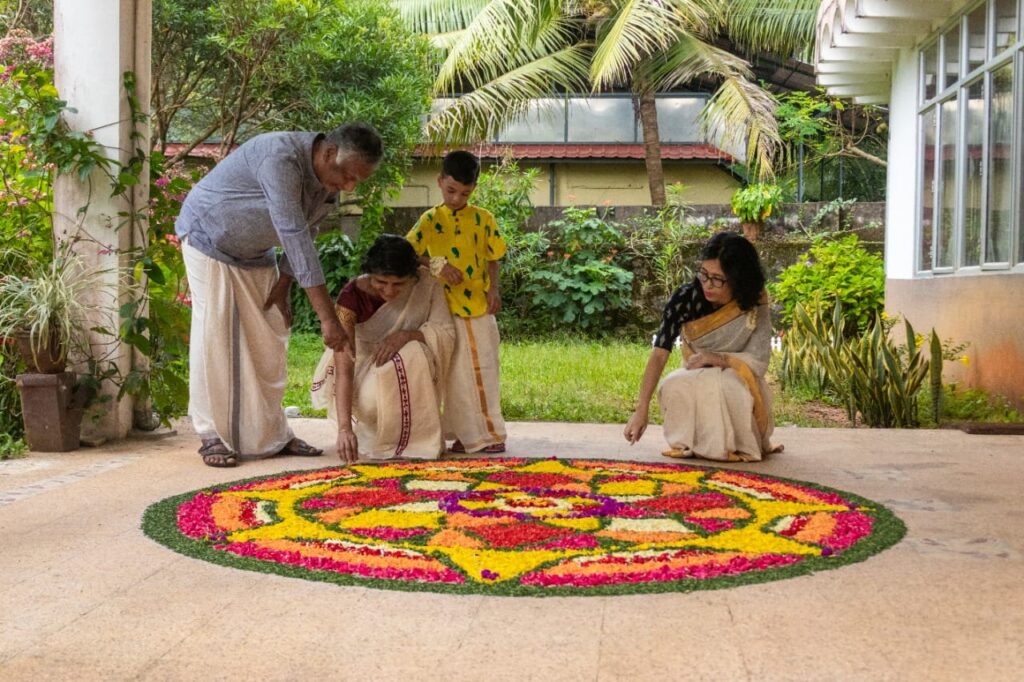
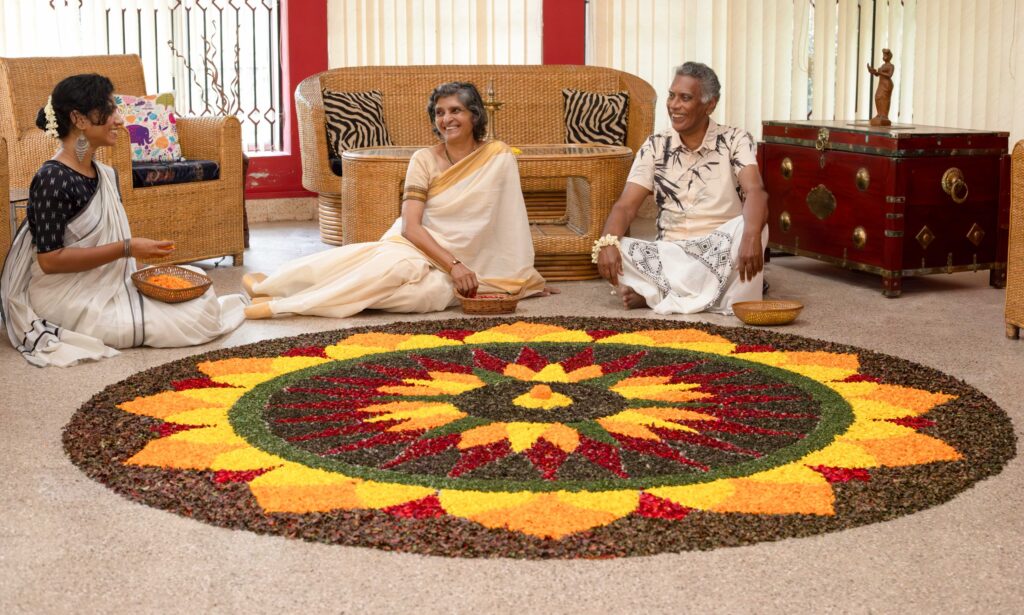
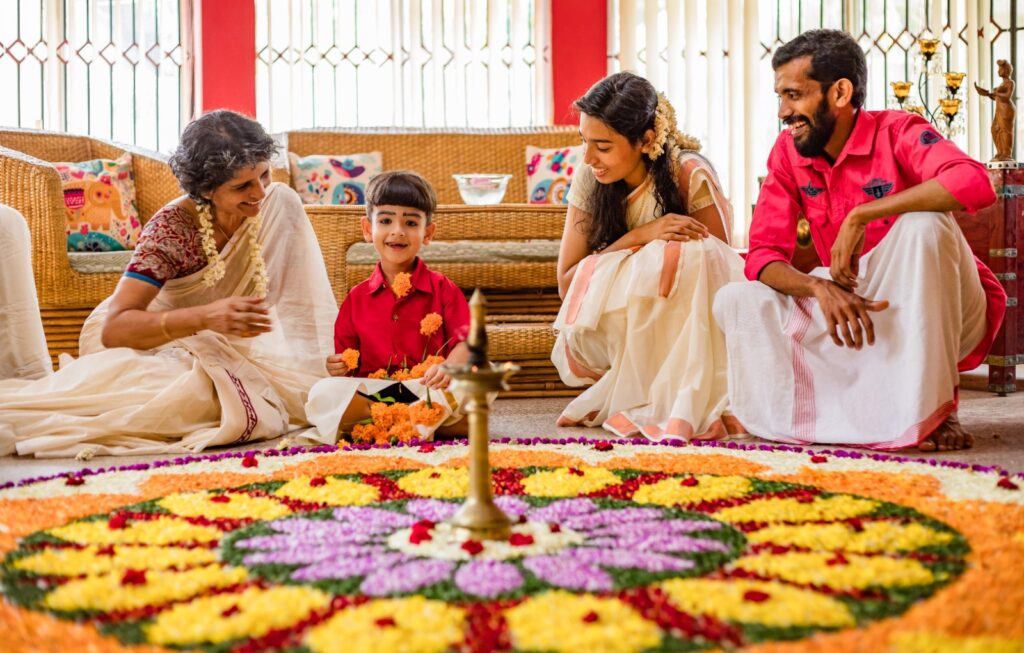
Traditionally, Onam was not a one-day event but a ten-day festival. Families would start preparations early: cleaning the house to welcome King Mahabali, designing vibrant pookalam (flower carpets) with children, while adults cooked together. Young men prepared for games, dances, and music. Each dish reflected not just nourishment but also the bounty of homegrown produce — yams, tubers, bananas, and gourds dug fresh from the soil. At a time before markets and shops, every household shared what they had, weaving community into the feast.

The Living Legacy
The Onam Sadhya is a living connection to Kerala’s roots — a feast where health, tradition, and joy unite. It is medicine disguised as celebration, a seasonal reset for body and spirit. Even today, as families gather around banana leaves, the Sadhya reminds us of a timeless truth: food is not just sustenance, but a bridge between people, nature, and the divine.

No responses yet